
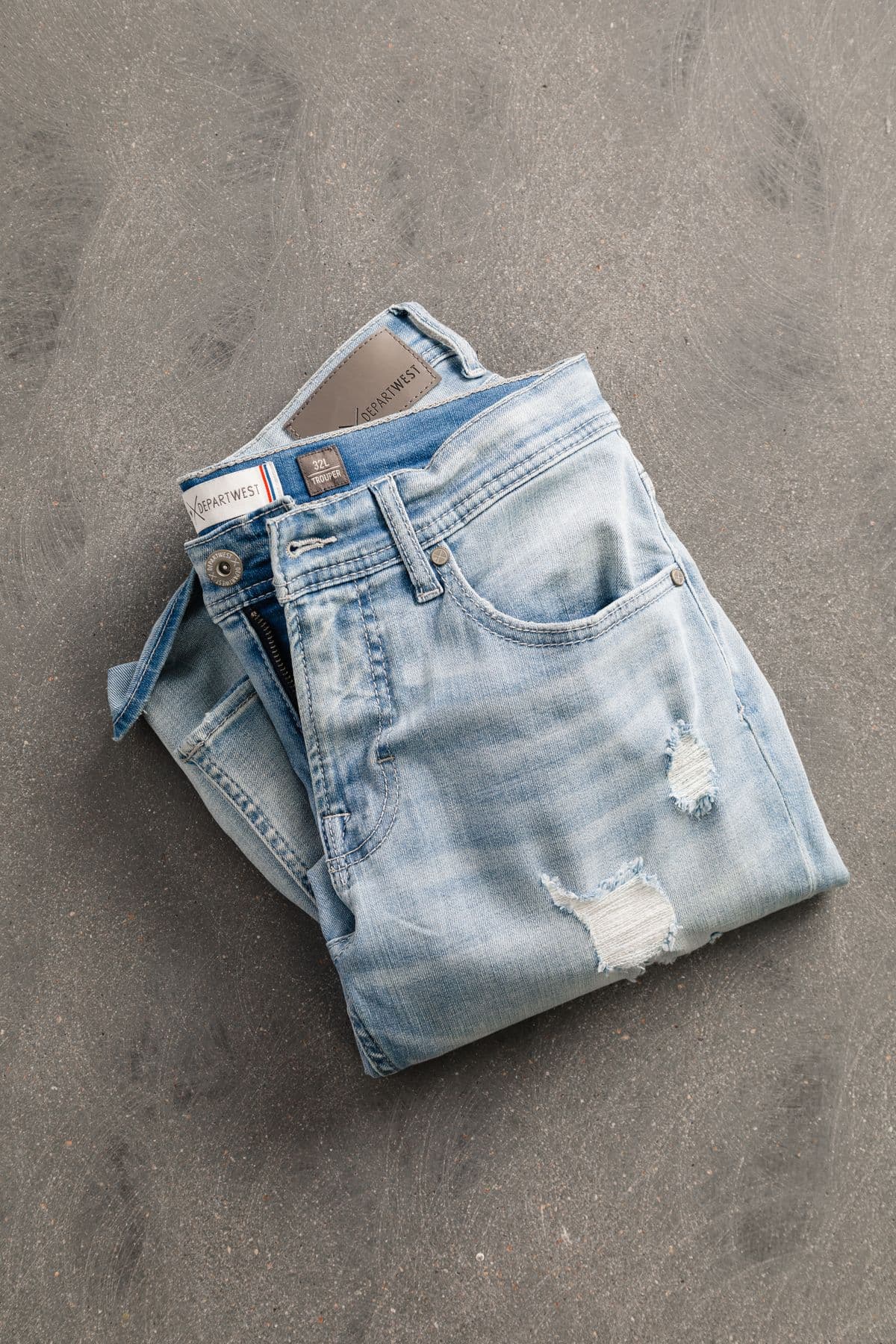
Cover image for: A Beginner's Guide to Buying Jeans That Actually Last

A Beginner's Guide to Buying Jeans That Actually Last

By WigWag Africa5 min read
Play Insight(8 min read)
0:000:00

Everyone owns jeans. Almost every clothing brand makes them, they show up at every price point, and they somehow fit into every style. But there's a big gap between grabbing whatever pair is on the rack and actually owning denim that gets better with age instead of falling apart within a year. To close that gap, we tapped into insight from Andrew Chen, founder of premium denim label 3sixteen and a partner at Self Edge, one of the most respected specialty denim retailers in the world. Chen has spent over two decades in the denim business, and his advice boils down to a simple but often overlooked idea: unlike almost everything else you own, a good pair of jeans should improve the more you wear them.

Learn to Measure Before You Shop

The single most useful skill for buying better jeans has nothing to do with brand names. It's learning how to measure the jeans you already own, things like inseam, leg opening, and overall length. Once you know those numbers for a pair you already like, you can shop with real reference points instead of guessing, and many online retailers now let you search by exact measurements rather than vague size labels.

Image description

Fit and Wash Come Down to Personal Comfort

There's no universal "correct" fit. The starting point is simply whether you feel good in what you already wear, then adjusting from there, whether that means sizing down in the thigh, changing where the jeans sit on your waist, or trying a different wash. A helpful trick before committing to a pair: search online for how that specific style fades over time, since different denim ages differently depending on the fabric and construction.

Skip the Luxury Fashion Houses

Chen's advice here is blunt: brands that specialize specifically in denim tend to build a far better product than general fashion labels that treat jeans as an afterthought. That doesn't mean fashion brands can't make a decent pair, but a dedicated denim brand is more likely to use quality hardware, proper stitching machines, and construction techniques built specifically for how jeans wear and stretch over time.

So What's the Best Type of Jeans to Buy?

If you're looking for the single best starting point, the consensus from denim experts consistently points toward raw, selvedge Japanese denim. It isn't the only path to a great pair of jeans, but Japan's textile industry has built a reputation for producing what many consider the best fabric in the world, backed by a deep, generational craft tradition around textiles. Starting there gives you a serious head start on quality, even if you eventually branch out into other styles.

For brand recommendations specifically, three names stand out for beginners:

Sugar Cane is the most accessible entry point, offering everything from historically accurate reproductions of classic vintage cuts to lighter, modern slim-straight fits.

3sixteen blends heritage-level construction with fits designed for how people actually dress today, making it a strong pick if you want vintage-inspired quality without a fully vintage silhouette.

Iron Heart is for anyone who wants to experience just how substantial denim can get. Its jeans are known for extreme weight and overbuilt construction, the kind of heft most people have simply never felt in a pair of jeans before.

Budget Around $200 to $400

You don't need to spend luxury-fashion-house money to get a genuinely world-class pair of jeans. Specialty Japanese denim can occasionally run $500 to $600, but that's the exception, not the rule. Most premium denim brands deliver their best work in the $200 to $400 range, and spending beyond that typically brings diminishing returns. That said, budget-friendly denim still has its place, it's simply a trade-off between upfront cost and long-term durability.

Weight Isn't Everything

Heavier denim has a reputation for being higher quality, but that's not strictly true. What heavier fabric does signal is effort, since it's genuinely harder to work with and requires machines tuned specifically to handle it, which often correlates with a brand that's invested more into the product. But durability ultimately comes down to care as much as construction. Jeans that are never washed and worn constantly will fall apart regardless of how well they were made.

Wash Less Than You Think, But Don't Skip It

Contrary to popular belief, skipping washes doesn't actually produce a better fade. Dirt embedded in the fibers acts almost like sandpaper over time, leading to premature rips, especially around the knees and crotch. The better approach: cold wash when they start to feel dirty, roughly every couple of weeks in summer and every month or two in winter, then hang dry rather than tossing them in a dryer.

Don't Be Afraid to Tailor, Within Reason

The one alteration worth making is shortening the length to fit properly. Beyond that, changing the actual cut of a pair of jeans is generally discouraged, since factory-sewn construction loses integrity once it's taken apart and reworked. If the fit feels wrong beyond length, the better move is trying a different cut entirely rather than altering the one you have.

Last Compliment Buying jeans that actually last isn't about chasing the flashiest brand name. It's about understanding your own measurements, choosing a brand that specializes in denim construction, starting with quality Japanese fabric where possible, and committing to basic care once you own them.

Get those fundamentals right, and a $200 to $400 pair of jeans can genuinely outlast a decade of cheaper replacements. Do you Agree?

0

Comments (0)

Share Post

WhatsApp

WIGWAG WHATSAPP CHANNEL

Join the wigwag community.

JOIN