

AI Bubble 2026: Boom, Billionaires, and the Statistical Reality Check
AI Bubble 2026: Boom, Billionaires, and the Statistical Reality Check
In Shenzhen, a former landscape design company that once specialized in gardens and ecological restoration is now worth billions because it pivoted into AI infrastructure. In Silicon Valley, engineers in their twenties are becoming billionaires faster than Wall Street bankers did during the internet boom. Across Africa, founders with limited access to compute power are racing to build AI systems before the next technological lockout begins. The world is entering a new economic era — one where intelligence itself is becoming infrastructure.
Artificial intelligence is no longer simply a software trend. It is rapidly evolving into what analysts are beginning to call the Intelligence Economy: a global system where data, computation, automation, and synthetic reasoning become the foundation of productivity, finance, media, logistics, defense, healthcare, and culture itself.
But every economic revolution creates a dangerous moment when belief begins outrunning reality.
The central question of 2026 is no longer whether AI will transform the global economy. It already is. The real question is whether the current explosion of investment, valuations, and billion-dollar startups represents the birth of a sustainable industrial revolution — or the early stages of the largest speculative bubble since the dot-com era.
The numbers are staggering. The global artificial intelligence market is projected to reach $1.34 trillion by 2030, up from roughly $214 billion in 2024. That represents a compound annual growth rate of nearly 36.6% — a trajectory so aggressive that AI could become larger than the GDP of entire developed nations within five years. Investors poured more than $200 billion into AI startups in 2025 alone, capturing nearly half of all global venture funding. Venture firms that once chased fintech and crypto are now restructuring entire portfolios around AI infrastructure, generative systems, autonomous agents, and machine reasoning.
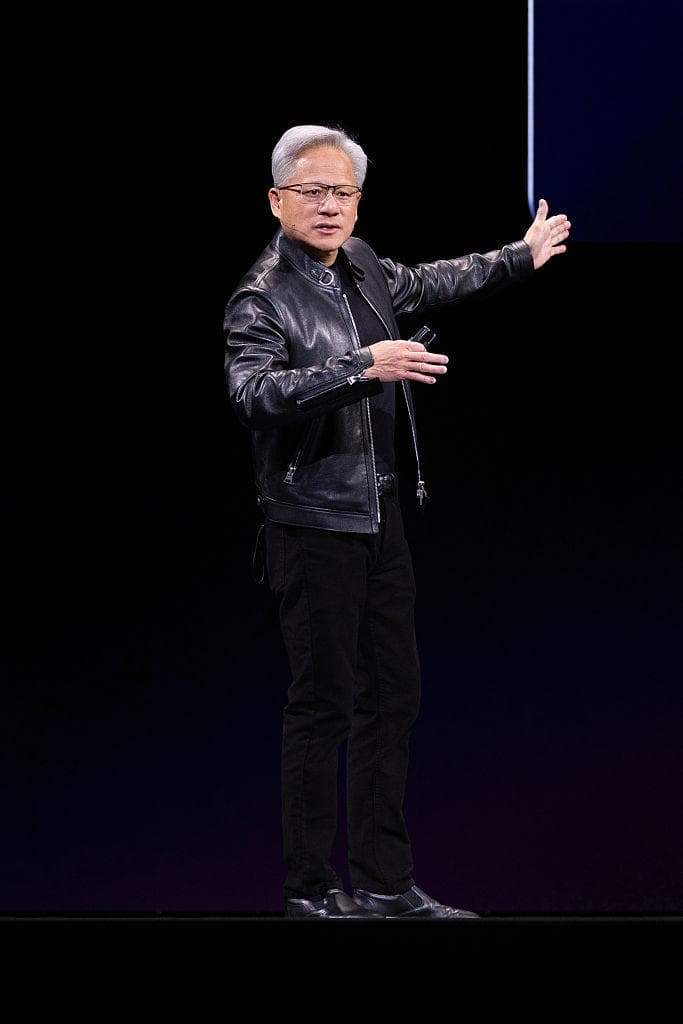
The speed of wealth creation has become almost surreal. NVIDIA surpassed a market valuation of more than $5 trillion, making it more valuable than the entire German stock market. CEO Jensen Huang added tens of billions of dollars to his fortune within a single year as demand for AI chips exploded globally. Former researchers from OpenAI and other frontier labs are launching startups that achieve billion-dollar valuations before shipping meaningful revenue-generating products.
To many investors, this resembles the early internet era. To others, it resembles something far more dangerous.
The dot-com bubble of the late 1990s was built on a similar narrative of inevitability. Investors believed the internet would reshape commerce, communication, and society — and they were correct. What they misjudged was timing, sustainability, and valuation discipline. Thousands of companies collapsed even as the internet itself transformed the world. The lesson from history is uncomfortable: revolutionary technology and speculative bubbles can exist simultaneously.
Not everyone agrees that the AI market is a bubble destined to correct violently. A growing school of thought — championed by venture capitalists like Marc Andreessen and Databricks co-founder Ion Stoica — argues that AI is fundamentally different from the internet boom because intelligence deflation changes everything. In the 1990s, the internet reduced transaction costs. AI, by contrast, reduces the cost of cognition itself. When companies can deploy millions of virtual software engineers, marketers, researchers, and customer-service agents for a fraction of traditional labor costs, productivity gains stop behaving linearly and begin behaving exponentially. AI systems are also beginning to improve themselves through reinforcement learning and synthetic-data generation, creating a compounding flywheel no previous technological revolution possessed at this scale. Andreessen has described the bubble comparison as “lazy historical analogizing,” arguing that NVIDIA’s multi-trillion-dollar valuation sits atop real revenues generated by real infrastructure demand — not speculative vaporware. In this interpretation, the true bubble may not exist inside AI itself, but rather inside every industry refusing to adapt to it quickly enough.
Today, AI exhibits many of the same characteristics as previous speculative eras. Capital is moving faster than infrastructure maturity. Startups are being priced based on future assumptions rather than present economics. Companies are integrating AI not always because it improves operations, but because failing to adopt it creates reputational risk. In many boardrooms, AI has become less of a strategic choice and more of a survival signal.
The adoption statistics are undeniably impressive. Roughly 72% of businesses globally now use AI in at least one operational function, compared to less than one-third in 2023. India currently leads enterprise adoption rates at approximately 59%, followed closely by the UAE, Singapore, and China. Even slower-moving economies such as France and Spain are accelerating deployment rapidly. Governments are investing heavily in sovereign AI strategies, while corporations are rebuilding workflows around automation and generative systems.
Yet beneath the excitement lies a widening gap between implementation and measurable utility.
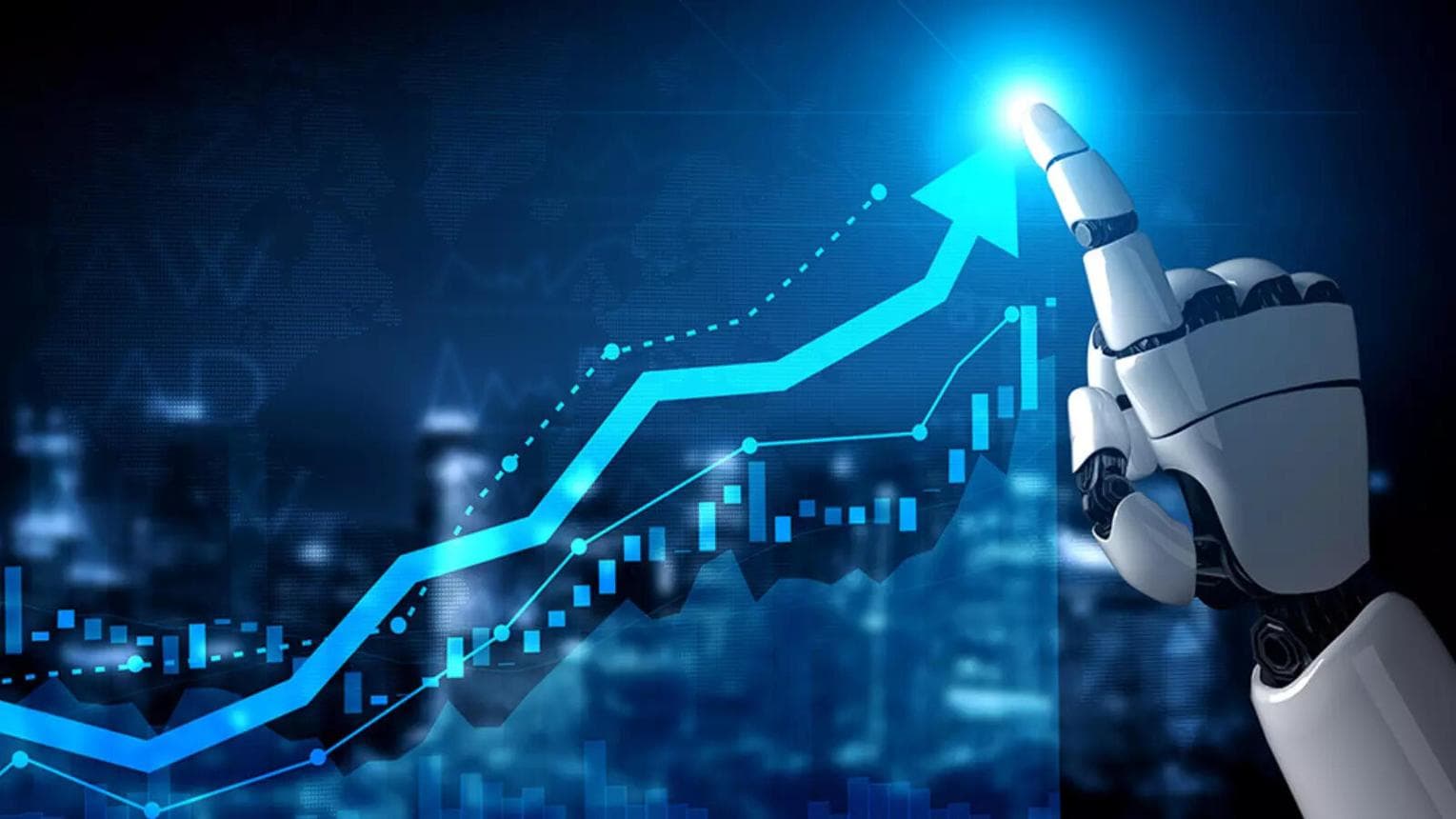
Around 64% of business owners believe AI will significantly improve productivity, while nearly 97% say tools like ChatGPT will positively affect their operations. However, only around 42% report meaningful efficiency gains so far. Many organizations are purchasing AI tools aggressively without fully understanding how to integrate them into existing systems. The result is a growing layer of expensive software subscriptions, rushed deployments, and underutilized infrastructure.
This disconnect is beginning to resemble a phenomenon economists call synthetic growth — where perceived future potential inflates valuations faster than real-world productivity improvements can justify them.
Voice search is now used daily by nearly half of U.S. mobile users, and one in three businesses plans to use generative AI for website content, marketing, and customer engagement. But alongside the optimism sits rising anxiety. Approximately 43% of companies worry about becoming overly dependent on AI systems, while 35% fear they lack the technical expertise required to deploy the technology responsibly. The technology is advancing faster than institutional understanding.
The labor market introduces another layer of uncertainty. Around 77% of consumers believe AI will contribute to job losses within the next several years. According to estimates from McKinsey & Company, nearly 400 million workers worldwide could eventually face displacement from AI-driven automation between 2016 and 2030. Healthcare, logistics, finance, legal operations, transportation, and manufacturing are expected to experience some of the largest transformations.
And yet, the mass displacement wave still has not fully arrived.
Major economies continue reporting historically low unemployment rates. The timeline for large-scale replacement keeps moving further into the future. Some economists believe AI will ultimately create more jobs than it destroys, generating entirely new industries around synthetic media, AI oversight, prompt architecture, autonomous systems management, and machine-human coordination. Others believe the current calm is temporary — a delay before productivity pressure eventually forces companies into aggressive labor restructuring.
If the AI bubble bursts before large-scale displacement occurs, workers may temporarily avoid catastrophe while investors absorb the losses. But if automation accelerates after infrastructure consolidation, labor markets may face an entirely different type of disruption later in the decade.
Trust may ultimately become the most important currency in the AI era.
More than 75% of consumers now express concern about AI-generated misinformation, a higher distrust level than social media platforms faced during their peak expansion years. Deepfakes, synthetic voice scams, automated propaganda, and AI-generated impersonation systems are becoming increasingly sophisticated. A single manipulated video now has the power to erase billions from a public company’s market value within hours.
Yet despite those fears, roughly 65% of consumers still say they are willing to trust businesses that use AI — provided those businesses remain transparent and accountable. That creates what many analysts now describe as a fragile trust economy. AI’s long-term adoption will depend not only on capability, but also on whether institutions can maintain legitimacy while deploying increasingly synthetic systems.
This may become especially critical for media companies, governments, and digital platforms. In an era where images, audio, articles, personalities, and even live conversations can be artificially generated, authenticity itself becomes premium infrastructure.
Regulation may ultimately pop the AI bubble faster than any market correction. The EU AI Act, fully enforced across all 27 member states by early 2026, has introduced a tiered risk framework that imposes heavy compliance costs on general-purpose AI systems. High-risk applications — including recruitment tools, credit scoring, biometric surveillance, and AI used in critical infrastructure — now require conformity assessments, technical documentation, and human oversight. Non-compliance fines can reach up to €35 million or 7% of global annual revenue, whichever is higher. Several European AI startups have reportedly struggled under the legal and technical burden of compliance, while larger firms increasingly dominate the market through scale advantages. Meanwhile, China’s generative-AI regulations require security reviews, watermarking systems, and alignment with state-approved standards, effectively tightening government oversight across the ecosystem. In the United States, the absence of a unified federal framework has created a fragmented regulatory landscape, with individual states introducing their own AI safety laws and liability structures. If a major AI-driven catastrophe occurs — from election interference to autonomous-system failures — the resulting regulatory avalanche could rapidly compress valuations across the sector, especially among startups operating on thin margins and speculative capital.
The geopolitical race around AI is also intensifying rapidly. The United States and China currently dominate AI wealth creation, infrastructure ownership, semiconductor production, and frontier-model development. Together, they have produced dozens of AI-linked billionaires whose combined wealth approaches several trillion dollars. Europe is attempting to establish itself through regulation, open-source ecosystems, and emerging companies such as ElevenLabs and Mistral AI.
Meanwhile, the Middle East is investing aggressively into sovereign compute infrastructure, energy-backed AI campuses, and state-aligned AI initiatives. Governments increasingly view AI as a national-security issue rather than merely a technology sector.
Africa remains one of the most fascinating and uncertain regions within the global AI race.
The continent currently has no globally dominant AI-native billionaires, but that may conceal a deeper opportunity. Unlike the United States and China, Africa is not heavily burdened by legacy infrastructure. Many African startups are bypassing older technological systems entirely and moving directly into mobile-first AI deployment across finance, agriculture, healthcare, logistics, education, and language systems.
Yet none of this works without reliable electricity — a luxury only around 56% of sub-Saharan Africans consistently enjoy, and one that data centers and AI inference systems consume in enormous quantities.
Companies such as Intron Health are developing voice-recognition systems trained on African accents and healthcare environments. Leta is using AI to optimize supply chains and transportation routes across fragmented infrastructure markets. Cassava Technologies continues expanding cloud and data-center infrastructure across the continent, while fintech firms like LemFi are building cross-border financial rails that could eventually integrate AI-driven financial intelligence systems.
But Africa also faces a dangerous possibility: becoming one of the world’s largest AI consumption markets without becoming a major AI ownership market.
That distinction matters enormously.
The next generation of global wealth may not belong solely to companies building consumer apps. It may belong to those controlling compute infrastructure, chip access, data pipelines, distribution systems, and trust layers. If Africa fails to build sovereign AI infrastructure, local startups may remain dependent on foreign models, foreign cloud providers, and external intelligence systems indefinitely.
This is why some African investors and entrepreneurs are beginning to shift attention toward infrastructure itself. Zimbabwean telecom entrepreneur Strive Masiyiwa has already invested heavily into digital infrastructure partnerships linked to cloud ecosystems and compute expansion. Across the continent, conversations around data centers, sovereign cloud systems, and AI-enabled telecommunications are accelerating quietly beneath the surface.
The real AI war may not be about chatbots. It may be about who owns the intelligence infrastructure beneath civilization itself.
Several warning signs suggest the market is entering euphoric territory. Many AI startups now trade at 50x or even 100x annual recurring revenue — far above historical software-sector norms. Former employees from frontier labs are becoming billionaires within a few years of launching startups. Private valuations are inflating rapidly through funding rounds disconnected from profitability. In China, even companies from unrelated industries are pivoting toward AI narratives to attract investor attention.
One of the clearest examples emerged when Chinese landscape design firm Hui Lyu Ecological Technology Groups saw its shares surge nearly 1,600% after investing in AI optical hardware manufacturer Tri-light Wuhan Electronics Technology. The company originally specialized in ecological restoration and city landscaping projects, yet market enthusiasm around AI infrastructure transformed it into one of the hottest stocks in China almost overnight.
This is precisely how speculative manias behave. During the railway boom, companies attached themselves to rail narratives. During the internet era, firms added “.com” to their names. Today, almost every industry is attempting to attach itself to artificial intelligence.
And yet, unlike many previous bubbles, there is also genuine industrial reality underneath the speculation.
NVIDIA’s revenues are real. AI data centers are real. Semiconductor shortages are real. Enterprise demand for automation is real. Governments are restructuring national policy around AI competitiveness. The infrastructure being built today will likely shape global productivity for decades.
This is what makes the AI bubble uniquely dangerous and uniquely powerful at the same time. The technology itself is not imaginary. The uncertainty lies in valuation timing, market psychology, and who ultimately survives consolidation.
The most likely outcome may not be a catastrophic collapse similar to 2000, but rather a violent correction followed by concentration. Overvalued startups with weak fundamentals may disappear or be acquired cheaply. AI hype sectors may cool dramatically. But foundational infrastructure — chips, compute systems, enterprise automation, robotics, energy-linked data centers, and intelligence-layer software — will likely continue growing even after speculative capital retreats.
For businesses, the challenge is no longer simply adopting AI tools. It is identifying where durable value actually exists inside the ecosystem. For governments, the race increasingly centers around compute sovereignty, semiconductor access, and infrastructure independence. For creators and media companies, AI introduces both unprecedented leverage and unprecedented danger around authenticity, identity, and trust.
The real question of the next decade may not be whether AI changes civilization.
It may be who still owns infrastructure, distribution, and trust after the bubble cools.
History suggests speculative manias often destroy thousands of companies while quietly creating a handful of long-term empires underneath the chaos. Railroads did it. Electricity did it. The internet did it.
Artificial intelligence may simply be the next chapter in that pattern.




Comments (0)