
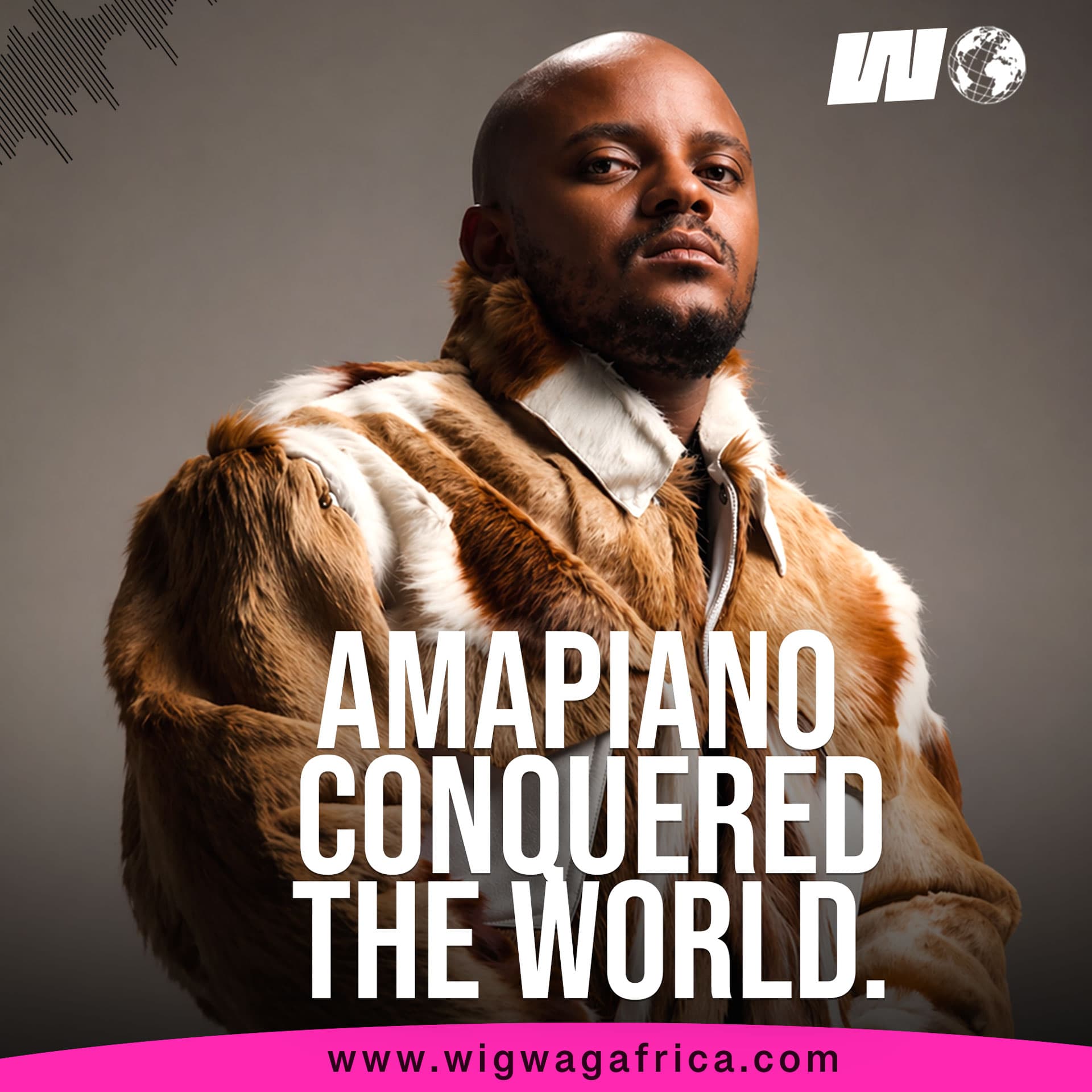
Amapiano Conquered the World.
In the mid-2010s, a new sound began echoing through the townships of Gauteng, South Africa—a hypnotic fusion of deep house, jazz, and kwaito built around a distinctive log drum rhythm.
That sound became Amapiano (from the Zulu word for "the pianos").
By 2026, it is no longer just a genre. It is a global dance language.
From clubs in Johannesburg to playlists in London, New York, and Tokyo, Amapiano has scaled faster than most African cultural exports in modern history.
Billions of streams (over 5 billion in 2024 alone)
Festival headliners from Coachella to Afro Nation
Global adoption — with 15% penetration in European markets and 40% of royalties now coming from outside Africa
On the surface, this looks like success.
But underneath, it reveals something more important.
The Real Story Isn't the Sound. It's the System. Amapiano did moved through centralized strategy.
DJs and dance culture
Social media (TikTok's #Amapiano: 10+ billion views)
Community-driven distribution
Who invented it? The pioneers. There's no single inventor. But key architects include:
MFR Souls – Often credited with first shaping the genre in the mid-2010s.
Kabza De Small & DJ Maphorisa (Scorpion Kings) – The duo who revolutionized and globalized the sound.
Other foundational artists – DBN Gogo, Vigro Deep, DJ Stokie, Jaivane.
Current A-Pop vybz: The new global superstars Tyla – The South African amapiano-pop sensation. "Water" made her the first SA solo artist in 55 years to hit the Billboard Hot 100. In 2026, she won her second Grammy for Best African Music Performance. Net worth: $8M–$15M.
Asake – The Nigerian superstar masterfully fusing Afrobeats with Amapiano production. Net worth: ~$12M.
Diamond Platnumz – Tanzania's Bongo Flava king spreading Amapiano across East Africa. Net worth: $10M–$60M (Wasafi Records empire).
But Here's the Problem: Virality Is Not Ownership Amapiano generates billions of streams. It influences global pop music. It shapes dance culture worldwide.
Yet key questions remain:
Who controls its narrative?
Who structures its global positioning?
Who captures long-term value from its growth?
The sound travels. The value often disperses.
In 2024, Amapiano generated an estimated $120 million in global royalties. Less than 15% stayed in South Africa. The rest flowed to label distributors outside the continent, global DSPs, and sync agencies headquartered in London, New York, and Stockholm.
That's not a creativity gap. That's a distribution and positioning gap.
What This Reveals About Africa Amapiano is not an isolated case.
It reflects a broader pattern:
The World Consumes Culture at Scale.
But the systems that structure, position, and retain value are still underdeveloped.
This is not about making more music. It's about owning the infrastructure around that music.
The Shift That Matters The next phase of African growth will not be driven by:
More content ✗
More creativity ✗
More visibility ✗
It will be driven by:
Control of how culture is packaged, understood, and distributed globally.
How to Spark Your Own Rise For the next generation of African artists, producers, and entrepreneurs, here's a playbook to build ownership, not just streams:
Master the sound – But innovate. Blend genres. Make it yours.
Build your brand – Authenticity + consistency = memorability.
Collaborate strategically – Movements beat solo acts.
Own your masters – Don't trade long-term equity for short-term advances.
Leverage viral moments – TikTok challenges can launch careers. Just ensure your rights are attached.
Register with ALL royalty bodies – Many African artists leave millions unclaimed.
Think distribution-first – Who is selling your music globally? What's their cut?
Stay independent until you can't – The best deals come when you have leverage.
Where WigWag Fits WigWag is not here to document culture.
We exist to:
Structure it
Position it
Translate it into global understanding
Because without structure, visibility fades. Without positioning, influence doesn't convert.
Amapiano proved that Africa can shape global culture.
The next question is more important:
Can Africa control what that influence becomes?
That's not a question for artists alone. It's a question for distribution systems, legal frameworks, investment strategies, and platforms like WigWag.
The sound has conquered the world. Now let's conquer the system behind it.
Ready to structure your culture for global ownership? WigWag 2026




Comments (0)