
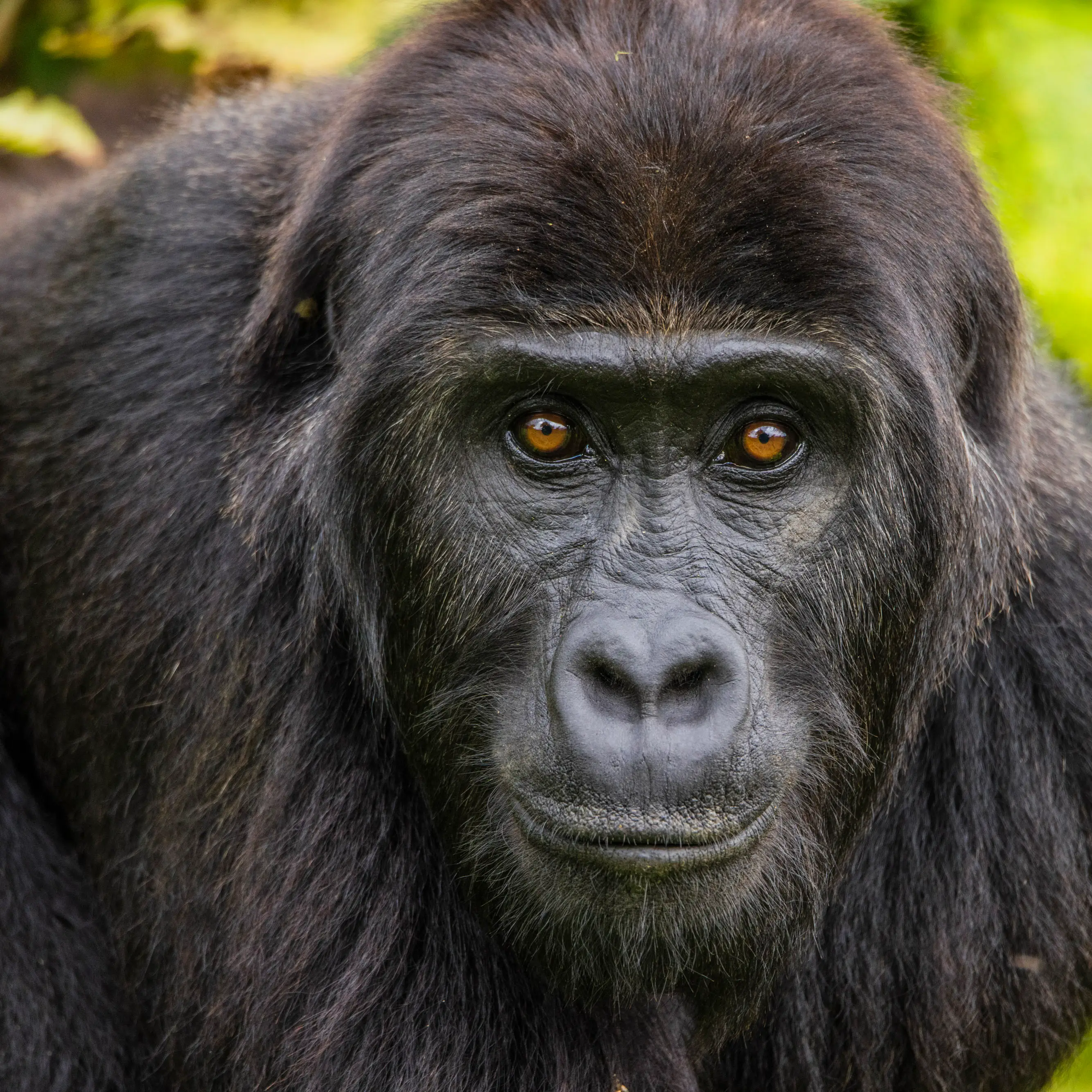
Bwindi Isn't For Everyone. That’s Why It Converts..
For travelers who have already done the savannah safari twice, the Gorilla Trekking experience in Southwestern Uganda offers something increasingly rare: Genuine wildness without the crowds.
WigWag.
BWINDI IMPENETRABLE FOREST, UGANDA — The first thing you notice is the silence.
Not the curated quiet of a resort lobby, but the deep, living silence of a mist-covered mountain forest—where the only sounds are bird calls, dripping leaves, and your own breathing at 2,300 meters.
The second thing you notice: there is no line.
No queue for a photo. No gift shop pushing identical souvenirs. No staged moments competing for attention.
This is not an accident. And it is not a failure of marketing.
It is a choice.
The Uncrowded Alternative to Rwanda
Twenty-five kilometers south, across the border in Rwanda, Gorilla Trekking has become one of Africa’s most polished tourism products.
Permits cost $1,500. Access is streamlined. The experience is refined, predictable, and efficient.
Uganda offers a different proposition.
Permits are $800. The roads are rougher. The lodges are fewer. The trekking groups are smaller.
To the average traveler, Rwanda appears easier.
But to a specific kind of traveler—the one who has already experienced the Serengeti in peak season, who finds “curated” slightly over-optimized, who values encounter over convenience—Bwindi offers something increasingly rare:
Genuine remoteness.

Here, you don’t arrive at the experience. You work your way into it.
And that changes everything about how it feels.
What Positioning Looks Like—Not What It Sounds Like
Notice what just happened.
This is not a call for “better marketing.” It is not a discussion about visibility.
It is positioning—executed.
For whom? The experienced traveler seeking depth over convenience. Against what? A more polished, higher-cost alternative. What trade-off? Infrastructure friction in exchange for authenticity. Why believe it? Clear, specific signals—price, terrain, scale, atmosphere.
Most destinations attempt to scale visibility before defining identity. Bwindi does the opposite.
It defines identity so clearly that visibility becomes selective—and therefore more valuable.
The Architecture of a Positioned Destination
Strong positioning is not written. It is built.
In Bwindi, you can see it in the physical structure of the experience:
The permit cap Uganda limits trekking permits to 8 people per gorilla group. Fewer people on the trail is not a constraint. It is the product.
The roads Long, uneven access routes are not simply infrastructure gaps. They act as a filter—selecting for travelers willing to trade convenience for meaning.
The lodges Many Bwindi camps operate with limited connectivity—no Wi-Fi, inconsistent signal. This is not a missing feature. It is a deliberate absence.
You cannot consume this experience passively. You have to be present in it.
A Quiet Lesson for the Rest of Africa
Bwindi will never be the most visited destination on the continent.
It is not trying to be.
The traveler who chooses Bwindi is not browsing. They have already decided. They stay longer They spend more intentionally They leave as advocates, not just visitors
Most African destinations chase volume.
Bwindi engineers for fit.
And in tourism economics, fit compounds—while volume dilutes.




Comments (0)