
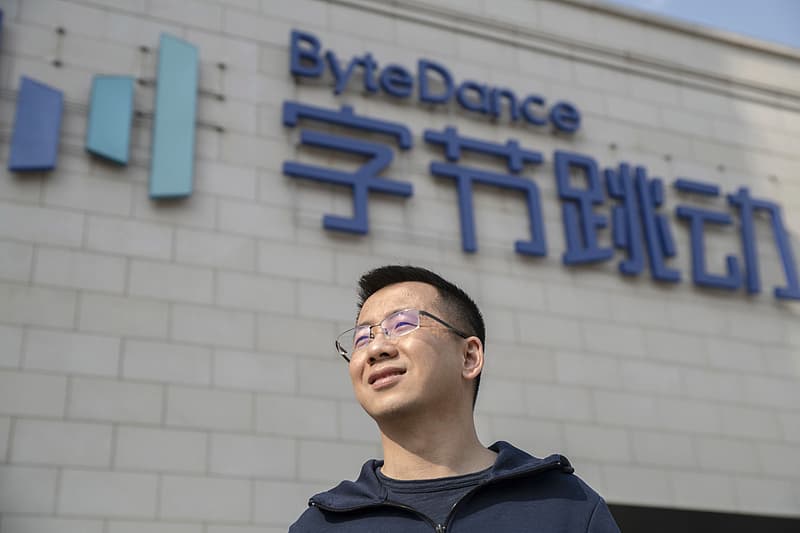
ByteDance Founder Zhang Yiming Becomes Asia's Richest Person as AI Push Drives Fortune Past $105 Billion
The 43-year-old entrepreneur has passed India's Gautam Adani on the Bloomberg Billionaires Index, with ByteDance's valuation climbing as the company deepens its bet on artificial intelligence.
Zhang Yiming, the founder of ByteDance — the parent company of TikTok — has become Asia's richest person for the first time, with his net worth now topping US$105 billion according to Bloomberg's Billionaires Index, overtaking Indian billionaire Gautam Adani.
The jump is striking in scale: Bloomberg first put Zhang's fortune at roughly $13 billion back in 2019. Today's figure is more than eight times that.
What's driving the surge
ByteDance remains privately held, but its valuation has kept climbing as the company pushes well beyond the social platforms — Douyin, TikTok, Toutiao — that built its fortune in the first place. The company has become one of China's most aggressive players in generative AI, with its consumer AI assistant Doubao reportedly reaching 345 million monthly active users in early 2026, alongside its video-generation model, Seedance.
Estimates of Zhang's exact wealth vary depending on the source, largely because ByteDance isn't publicly traded — valuations have to be pieced together from private funding rounds and secondary transactions rather than a stock ticker. Forbes, for instance, put his real-time net worth closer to $84 billion as of mid-September, ranking him 25th globally rather than first in Asia. The gap between rankings says less about Zhang himself and more about how uncertain private-company valuations can be at this scale.
The quieter role behind the numbers
Zhang stepped down as ByteDance's CEO in 2021, handing the role to co-founder Liang Rubo, and later gave up the chairman title too. Since then he's kept a low public profile — but he's reportedly stayed closely involved in the company's long-term technology direction, particularly around AI. Chinese media reported in August that Zhang had pushed ByteDance's AI teams to focus on building genuinely strong foundation models rather than chasing short-term leaderboard rankings, as competition among Chinese AI developers has intensified.
Beyond the balance sheet
Zhang has also continued building out his philanthropic footprint. In July, he added another RMB300 million to a charitable fund in his hometown of Longyan, Fujian province — bringing his total contributions there to RMB1 billion.
Why it matters: Zhang's rise is a signal of where the real money in Chinese tech is currently flowing — away from pure social/recommendation platforms and toward foundation-model AI, even for a company whose fortune was originally built on an algorithm rather than a chatbot. For anyone tracking global AI competition, ByteDance's trajectory — and Doubao's user numbers specifically — is one of the clearer signs that China's AI race isn't just a state-lab story; it's increasingly a consumer-platform one too.




Comments (0)