

Inside Uganda’s $50 Million Film Industry: The Rise of Ugawood
Inside Uganda’s $50 Million Film Industry: The Rise of Ugawood
This voice experience is generated by AI. Learn more.
The scene is a dusty backlot in the heart of Wakaliga, a vibrant slum in Kampala, where a group of young men is staging an elaborate fight scene using cardboard armor, rubber tires, and a homemade helicopter rotor built from scrap metal. Roughly 8,000 kilometers away, Adam Sandler is depositing another $48 million paycheck, and Tom Cruise is commanding $46 million for a single film. While Hollywood's A-listers bask in the glow of multi-million dollar deals and global streaming wars, Uganda's burgeoning film industry—lovingly nicknamed Ugawood—is scrapping, grinding, and pivoting from passion project to powerful economic engine. With an estimated annual value of roughly $50 million, Ugawood ranks low globally at around #150. Yet, as of early 2026, a new wave of government funding, diaspora connections, and raw creative energy is vying to change that ranking forever.
From Cardboard to Cinema: The Fight for Quality
The most significant hurdle facing Ugawood is the vicious cycle of poverty and production. Compared to Hollywood's estimated $225 billion annual spend on programming, Ugandan filmmakers operate on budgets that wouldn't cover lunch for an American film crew. The Uganda Observer reports that many productions are forced to self-fund due to local brand skepticism, which severely impacts quality and distribution. Isaac Ahimbisibwe, a local filmmaker, bluntly noted, “Many filmmakers are forced to produce mediocre work because they cannot afford the tools needed to create quality films.”
Moreover, the path to profit is littered with obstacles. Local broadcasters often air pirated footage, stripping creators of royalties, while streaming giants like YouTube offer paltry returns. Derrick Ssenyonyi recently highlighted stark disparities, noting African creators earn roughly $100 for 100,000 views compared to nearly $1,000 for their European counterparts. Add to this the cost of cinema slots—local films must pay to play in venues that host foreign blockbusters for free—and the playing field looks disastrously uneven.
Infrastructure remains another invisible challenge. Reliable sound stages, professional post-production houses, insurance systems, and institutional distribution pipelines are still limited. Many productions are forced to improvise equipment, locations, and even staffing structures. Yet paradoxically, this scarcity has become part of Ugawood’s identity. Resourcefulness is not just survival—it is now an aesthetic.
What is emerging is a generation of filmmakers who understand both the street-level realities of Kampala and the global grammar of digital storytelling. The result is an industry beginning to move beyond imitation into something uniquely Ugandan.
The Rise of the “Quentin Tarantino” of the Slums
Amidst this chaos, a revolutionary figure has emerged. Nabwana I.G.G., the founder of the infamous Wakaliwood studio, has become Uganda’s most famous cinematic export. Operating out of the slums of Kampala, Nabwana creates ultra-low budget action-comedies, with his 2010 cult hit Who Killed Captain Alex? reportedly costing only $85 to produce.
Referred to by international audiences as “Uganda’s Quentin Tarantino” for his gratuitous, over-the-top violence and DIY filmmaking style, the film has garnered nearly 10 million views on YouTube, achieving global cult status. His story is a testament to the power of digital distribution, proving that with imagination and a niche audience, you don’t need Hollywood’s projected $9.5 billion domestic box office machine to make a global cultural impact.
Wakaliwood’s rise also revealed something deeper: audiences increasingly crave authenticity over perfection. The rough edits, exaggerated action scenes, dubbed commentary, and raw humor became part of the charm. In many ways, Wakaliwood succeeded because it never attempted to hide where it came from.
Beyond the cult classics, 2026 is seeing a new layer of professionalization. Films like Unheard—which swept the iKon Awards with seven wins including Best Film—and the political thriller Call 112 starring Peter Odeke are setting new standards in storytelling, cinematography, and production value.
Younger filmmakers are also beginning to merge African storytelling with genres historically dominated by Western markets—science fiction, psychological thrillers, dystopian drama, and experimental documentary formats. Quietly, Ugawood is evolving from survival cinema into narrative cinema.
The Diaspora Connection: The Stars That Got Away
While local stars like Mariam Ndagire and Michael Wawuyo Jr. are household names in Kampala, Uganda’s true claim to global cinematic fame lies in its diaspora.
Daniel Kaluuya, the son of Ugandan parents, stands as the industry’s crowning glory. The Academy Award, Golden Globe, and BAFTA winner for films like Get Out and Judas and the Black Messiah represents what Ugawood aspires to produce on a global level.
Similarly, Ntare Guma Mbaho Mwine, known for roles in Blood Diamond and Queen of Katwe, continues to bridge the gap between Hollywood prestige and local Ugandan narratives.
These international figures do more than inspire. They create pathways. Diaspora filmmakers, producers, editors, and cinematographers are increasingly becoming connectors between Ugandan talent and global markets. Their existence proves that Uganda’s limitation is not talent—it is infrastructure, financing, and access.
This shift matters because modern entertainment is no longer purely geographic. Streaming has flattened discovery. A filmmaker in Kampala now technically competes in the same algorithmic ecosystem as creators in Los Angeles, Seoul, or Mumbai. The question is no longer whether Ugandan stories can travel. The question is whether the systems around those stories can scale.
Money, Policy, and the Future
Perhaps the most defining shift in early 2026 is the recognition of film as a serious economic vector. The state’s Uganda Communications Commission (UCC) is leading the charge.
In a landmark move, the UCC recently granted UGX 1.2 billion (approximately $320,000) to 14 local projects through its Content Development Support Program—a significant jump from the mere four winners in its inaugural cohort. Furthermore, in the 2025/2026 national budget, the government earmarked Shs 28 billion as a revolving fund to finance Uganda’s broader creative industry, including specific allocations for film SACCOs.
For many filmmakers, the money itself matters less than what it signals: institutional recognition.
The government is slowly beginning to understand what countries like South Korea, India, and Nigeria realized years ago—that culture is not merely entertainment. It is export power, tourism infrastructure, soft diplomacy, youth employment, and national branding rolled into one.
Eng. Alfred Bogere, UCC’s Director of Engineering and Communications Infrastructure, noted that these funds are intended to move the industry from “hobby” status to “career” status, emphasizing that “a single feature film production can employ over 100 people.”
Private-sector interest is also beginning to grow. Telecoms, betting companies, beverage brands, and fintech startups are increasingly seeing entertainment as an audience-acquisition channel rather than simply a sponsorship expense. That subtle shift could fundamentally change the economics of Ugawood over the next decade.
Awards, Recognition, and “Beyond Borders”
The engine behind much of this momentum is the award ecosystem. Uganda Film Festival and iKON Awards are becoming the twin pillars of Uganda’s emerging Oscar culture.
In 2026, the iKON Awards expanded its continental ambitions, moving its main ceremony to August to accommodate wider African participation. Organizers reported more than 200 submissions from across the continent, reflecting a growing regional appetite for East African storytelling.
These festivals are no longer simply ceremonial. They are becoming marketplaces—spaces where distribution deals, co-productions, streaming conversations, and talent discovery happen in real time.
Cross-border collaboration is particularly important. Co-productions involving Kenya, Rwanda, Tanzania, South Africa, and the Democratic Republic of Congo are becoming increasingly common, creating the beginnings of a pan-African production economy.
The long-term opportunity may not be Ugawood competing with Hollywood directly, but rather Africa building its own interconnected entertainment infrastructure—one rooted in local narratives but capable of global scale.
Conclusion: The World is Watching
Ugawood is not yet a David capable of slaying the Goliath of Hollywood. But the trajectory is impossible to ignore.
As the industry leans into technology—smartphone filmmaking, AI-assisted editing and script development, decentralized distribution, and diaspora advocacy embodied by figures like Gbenga Akinnagbe speaking at UCC House—the distance between Kampala and the global entertainment economy is shrinking.
For every Hollywood blockbuster that spends $200 million on marketing alone, there is a Ugandan director shooting a feature on a $100 budget and a dream. Yet increasingly, those dreams are no longer isolated acts of passion. They are becoming structured ecosystems.
The future of Ugawood may ultimately depend less on copying Hollywood and more on fully embracing its own advantages: authenticity, speed, improvisation, cultural richness, and digital-native audiences hungry for new stories.
Because somewhere in Wakaliga right now, another young filmmaker is building a spaceship from scrap metal, filming explosions with borrowed cameras, and uploading scenes onto the internet with no guarantee anyone will watch.
And yet the world increasingly is.
— Additional reporting by the WigWag Intelligence Team

Alongside Wakaliwood’s raw, scrappy energy, a new generation of polished, business-driven powerhouses is reshaping Uganda’s screen landscape. Loukman Ali, widely regarded as Uganda’s most internationally recognized contemporary filmmaker, stands at the forefront of that evolution. His breakout crime thriller The Girl in the Yellow Jumper, starring Rehema Nanfuka and Michael Wawuyo Jr., became the first Ugandan film to premiere on Netflix in December 2021—a watershed moment that signaled Uganda’s arrival within the global streaming economy.
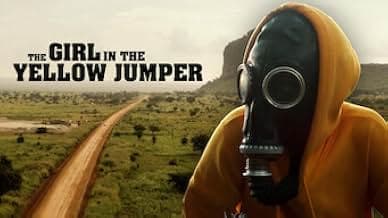
The licensing deal reportedly expired in early 2026 after a four-year run, with the film later transitioning to Canal+ for French-speaking markets, but Ali’s momentum has only accelerated. He remains the only Ugandan filmmaker with multiple titles distributed through Netflix. In 2023, his Nigerian crime-action feature Brotherhood premiered on Amazon Prime, later winning Best Nigerian Film at the Africa Movie Academy Awards. The project also earned Ali a historic double victory at the 2023 Africa Magic Viewers' Choice Awards (AMVCA), where he won both Best Director and Best Cinematographer—making him the first Ugandan filmmaker to secure two AMVCAs in a single night.

Earlier, his short film Katera of the Punishment Island debuted as part of Netflix and UNESCO’s African Folktales, Reimagined anthology after emerging from more than 2,000 submissions to secure a $75,000 production grant. Industry observers increasingly view Ali not simply as a filmmaker, but as part of a broader generation repositioning East African cinema within international premium-content pipelines, particularly after his reported pan-African financing partnership with French production firms Black Mic Mac and Logical Pictures. Meanwhile, Swangz Avenue —founded by Benon Mugumbya and Julius Kyazze—has evolved from a dominant music label into a multi-disciplinary entertainment company expanding aggressively into film production, with its feature film EVA expected in 2026. Other key players continue to deepen the ecosystem. Dilstories, established in 2011, has built a strong television footprint through productions such as Mama and Me and The Kojja for DStv, while filmmakers like Nisha Kalema and Rehema Nanfuka continue pushing Ugandan cinema into more sophisticated narrative territory. Kalema’s film Makula won Best Film and Best Director at the 2025 iKON Awards, while Nanfuka’s Nkinzi secured Best Feature Film honors at the Uganda Film Festival. Collectively, these creators represent a significant shift within Uganda’s creative economy—from survivalist filmmaking toward scalable intellectual property, international distribution, and long-term cinematic infrastructure. With filmmakers like Loukman Ali landing global streaming deals and companies like Swangz Avenue scaling beyond music into integrated entertainment production, Uganda’s film industry is no longer simply seeking visibility. It is steadily positioning itself for relevance within the future architecture of African cinema.




Comments (0)