
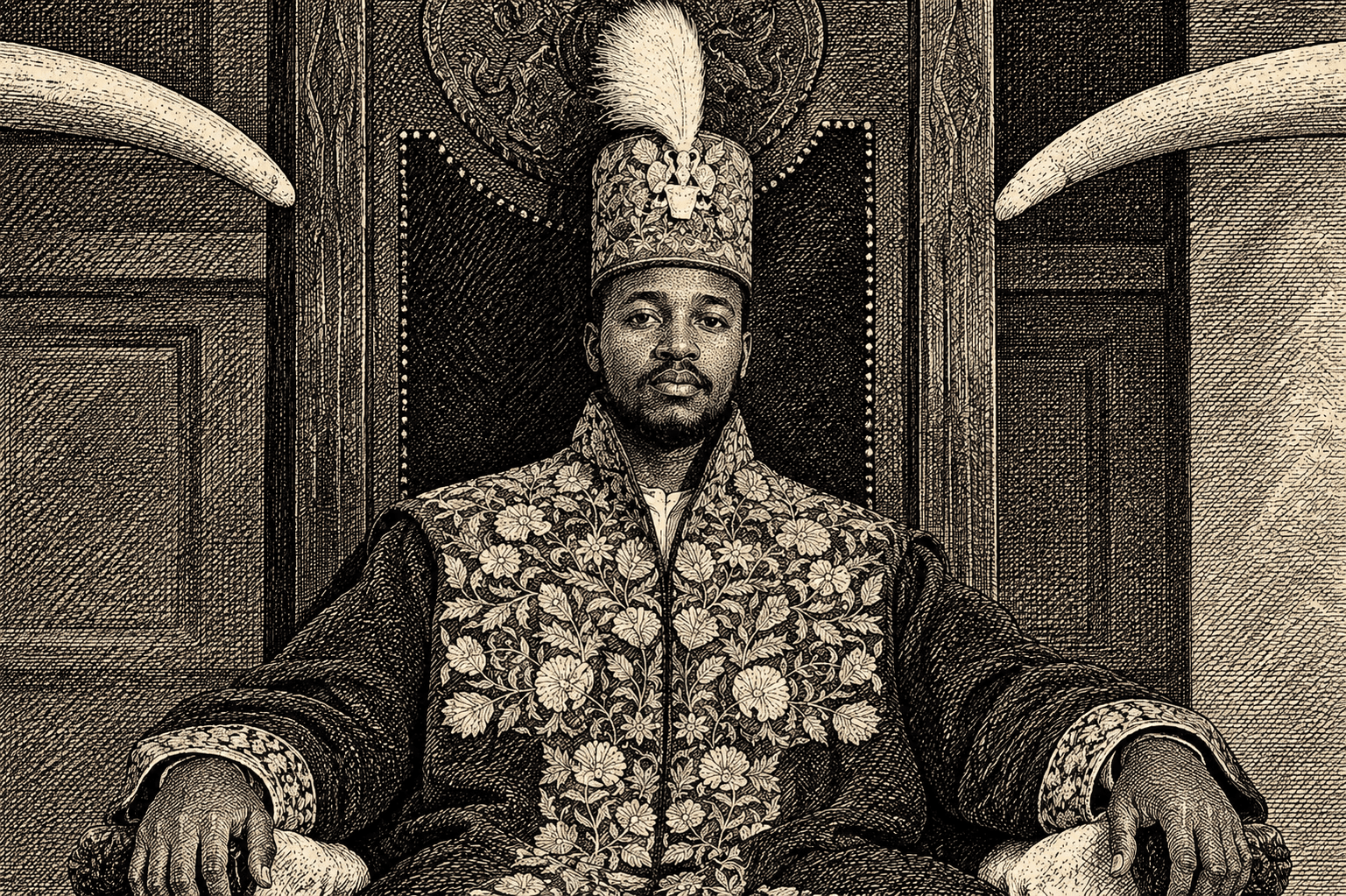
King Oyo Nyimba: The Full Story of the World's Youngest Monarch, His Reign, and the Nine Days Uganda Spent Saying Goodbye
Uganda's Tooro Kingdom has spent the past ten days moving through one of the most closely watched royal funerals in its modern history, the death and burial preparations of King Oyo Nyimba Kabamba Iguru Rukidi IV, once celebrated globally as the world's youngest reigning monarch. His story is unusual by any measure, a childhood coronation that made him internationally famous, three decades of quiet cultural leadership, and now a nine-day mourning period culminating in a burial date that lands, deliberately, on the anniversary of the very day he was first crowned.
A Throne Inherited at Three Years Old
King Oyo was born on April 16, 1992, and ascended to the Tooro throne on August 26, 1995, at just three years old, following the sudden death of his father, Rukirabasaija Patrick David Matthew Kaboyo Olimi III. He was formally crowned on September 12, 1995, in a ceremony that produced footage still circulated decades later, showing a small boy sitting in an oversized royal chair, playing with a toy while nearly disappearing beneath ceremonial robes and a crown built for an adult. That image made him an object of fascination well beyond Uganda's borders and eventually earned him recognition from Guinness World Records as the world's youngest reigning monarch.
A regency governed on his behalf throughout his childhood, and he did not take on the full ceremonial and public responsibilities of kingship until reaching adulthood, formally stepping into that adult role at age 18 in 2010. As the 13th Omukama of Tooro, he presided over a kingdom founded in the early nineteenth century and home to more than two million people in western Uganda, near the Rwenzori Mountains, one of several traditional monarchies that hold deep cultural authority without formal governing power under Uganda's modern constitution.
His Death and What Caused It
King Oyo died on August 27, 2026, at the age of 34, while receiving cancer treatment in the United States. Tooro Kingdom officials did not immediately disclose the cause of death, though a Ugandan government minister had indicated shortly before the announcement that the king was critically ill and undergoing treatment abroad. Subsequent reporting confirmed that he had been battling cancer, though the kingdom has not publicly disclosed the specific type of cancer or how long he had been ill.
His death triggered an immediate and widespread outpouring of grief across Uganda. Musician-turned-opposition-politician Bobi Wine publicly mourned him, and the Buganda Kingdom, Uganda's largest and most influential traditional institution, issued a message of solidarity with the people of Tooro. A local lawmaker representing the Tooro region captured the disbelief felt across the kingdom, describing the moment as feeling more like a dream than reality, one many still could not accept had actually happened.
On His Last Words
No last words attributed to King Oyo have been publicly released by the Tooro Kingdom, his family, or Ugandan officials at the time of this writing. Given that he died while undergoing medical treatment in the United States, away from public and cultural ceremony, it is not unusual that no final statement has been documented or shared. If the kingdom or his family choose to release any personal reflections or messages in the coming days, particularly around the burial itself, that information will likely emerge through official Tooro Kingdom channels rather than prior reporting.
The Pillars and Principles of His Reign
Across three decades on the throne, King Oyo built a public identity that extended well beyond ceremonial duty. Ugandan press coverage of his reign has consistently pointed to several causes he championed publicly: youth empowerment, education, climate conservation, and HIV and AIDS awareness. These were not abstract gestures. As a monarch who came of age entirely in public view, from toddler-king to adult cultural leader, he used the platform his unusual biography gave him to speak on issues affecting the next generation of Ugandans growing up the way he once did, under the weight of expectation and public attention from an early age.
His reign was also defined by continuity rather than disruption. Despite ascending the throne as a small child during a period when the kingdom's future leadership was entirely uncertain, King Oyo's three-decade rule became a symbol of institutional stability for Tooro, proof that the regency system that carried him through childhood could successfully deliver a functioning adult monarch capable of representing his people on the world stage.
The Nine Days of Mourning
What has unfolded since his death is a carefully structured nine-day cultural mourning period governed by Tooro tradition. His body was flown from the United States and received at Entebbe International Airport on September 4, where President Yoweri Museveni personally laid a wreath on the casket, draped in both the Ugandan national flag and the flag of Tooro Kingdom, before it was airlifted by military helicopter to Kyegegwa District.
Officials had originally planned to airlift the remains directly to Karuziika Palace in Fort Portal, but reversed course after what organizers described as overwhelming requests from residents along the Mubende to Fort Portal highway who wanted a chance to see their king pass one final time. Instead, the body was placed on a slow-moving open vehicle for a road procession through Kyegegwa, Kyenjojo and Kabarole districts, with crowds lining the highway to say goodbye.
Since arriving at Karuziika Palace, the king's body has lain in state, with visiting windows organized for mourners from across Tooro's nine districts. Under Tooro custom, a king cannot be buried after dark, so officials have scheduled the burial itself for a strict window between 1pm and 2pm on September 12. That day will open with a funeral service at St John's Cathedral at 9am, after which mourners will walk the route to the Karambi Royal Tombs, known traditionally as Amagasani, where King Oyo will be laid to rest alongside his father and two of his royal predecessors. Preparation of the burial ground itself began within days of his death, with renovation work on access roads and the specific royal plot restricted to workers only, since kings at Karambi are buried in a designated location, not in open ground the way other royals are.
The Uganda government has treated the funeral as a matter of national significance. Prime Minister Robinah Nabbanja chaired an inter-ministerial meeting to coordinate the arrangements, and a joint security team drawn from the Uganda Police and the Uganda People's Defence Forces has been assigned to manage the procession's movement through populated areas along the route.
The Unresolved Question of Succession
Beneath the ceremony sits a more delicate matter that has drawn significant public attention, the question of who succeeds King Oyo. He was not officially married at the time of his death, a fact that has raised concern about a possible succession crisis. President Museveni has stated publicly that the king's mother informed him her son had left behind an heir, but Tooro Kingdom officials have said they have no confirmed knowledge of the child, and the kingdom has not yet named the boy publicly.
A local government minister has sought to reassure the public that the kingdom's institutions remain intact regardless of the uncertainty, pointing to the Babiito clan's leadership structure and a 21-member body currently overseeing the kingdom's affairs during the transition. A regency arrangement similar to the one that governed on Oyo's behalf during his own childhood reign is expected to guide the kingdom in the heir's name once succession is formally resolved, an echo of the very system that first placed a three-year-old on the Tooro throne three decades ago.
A Reign That Closes Where It Began
There is a quiet symmetry to the date the Tooro Kingdom has chosen for King Oyo's burial. September 12, 2026 marks 31 years to the day since a small boy was formally crowned king in 1995, barely able to see over his own throne. That same date will now mark the moment Uganda lays him to rest at Karambi, closing a life that began under a crown too large for a child and ends with a nation's president bowing before his casket. For the people of Tooro, the coming resolution of his succession may prove to be the next chapter still waiting to be written, but for now, the kingdom's attention remains fixed on giving its king, one it watched grow up in full public view, the send-off Tooro custom demands.

Comments (0)