
The African Century Begins Here: What Bill Gates Saw in Rwanda — and Why the Rest of the Continent Is Watching
The African Century Begins Here: What Bill Gates Saw in Rwanda — and Why the Rest of the Continent Is Watching
By WigWag Africa | Business & Technology | July 26, 2026
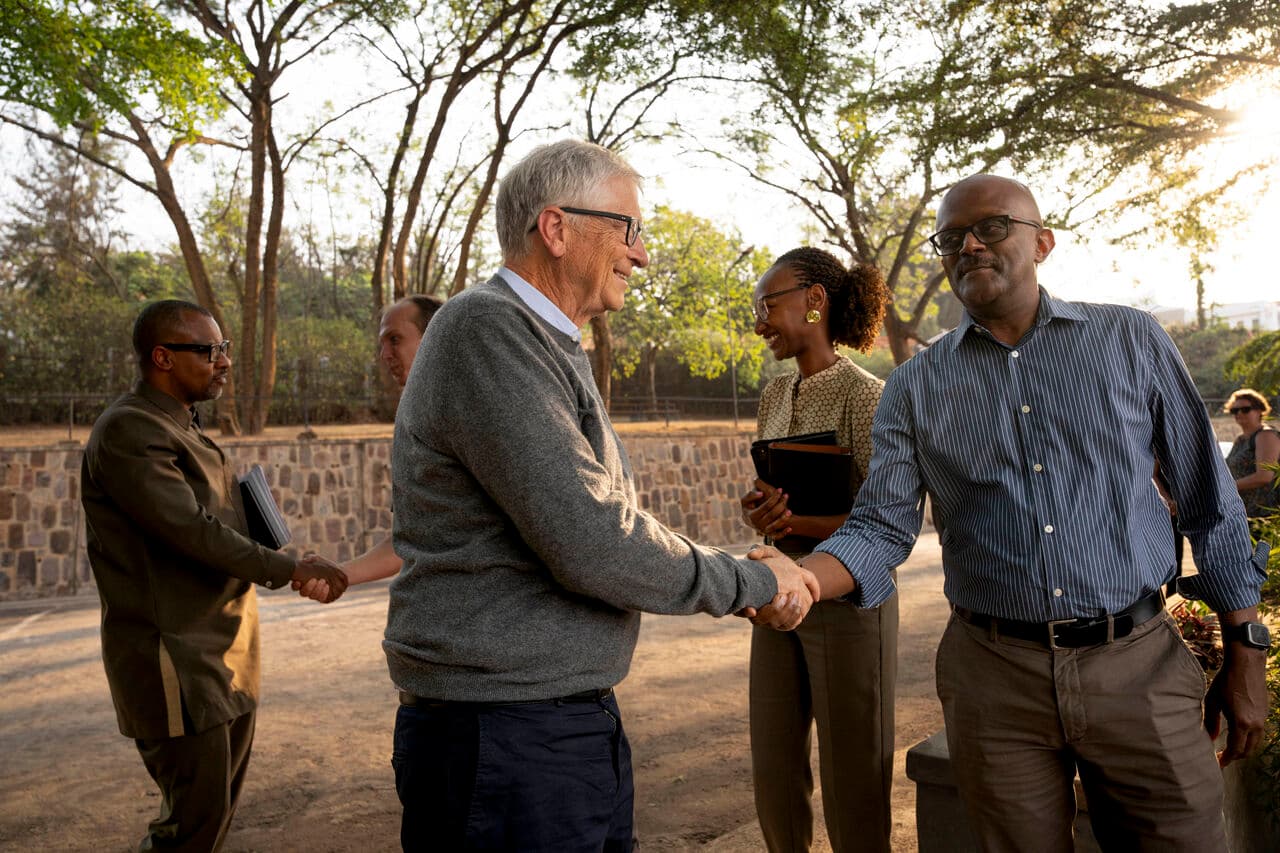
When Bill Gates stepped off a plane in Kigali last week, he did not arrive as a donor. He arrived as a student.
That distinction matters. The Microsoft co-founder and Gates Foundation chair has spent more than two decades writing cheques to Africa — funding vaccines, supporting community health workers, financing the invisible infrastructure of survival. But the purpose of his July 2026 visit to Rwanda was different. He said so himself, in a LinkedIn post that has since been shared hundreds of thousands of times: "I'm excited to be in Rwanda this week to learn more about the country's progress in health, agriculture, and digital public infrastructure." Not to give. To learn.
For those who have been watching Africa closely, that sentence carries enormous weight. When one of the world's most consequential philanthropists — a man who could spend time anywhere on the planet — chooses to fly to Kigali to observe rather than instruct, something fundamental has shifted in the story of what this continent is building.
Rwanda, it turns out, has something to teach the world.
The Numbers That Stopped a Billionaire in His Tracks
To understand why Gates made the trip, start with the statistics he cited in his CNBC Africa interview before departure. Since the year 2000, Rwanda has reduced the number of children who die before their fifth birthday by 80 percent. Maternal deaths — women dying during pregnancy and childbirth — have fallen by 85 percent over the same period. These are not incremental gains. They are among the most dramatic improvements in human health outcomes recorded anywhere on the planet in a single generation.
"What stands out to me is not one particular innovation," Gates said, "but the way the country's long-term investments in people, strong institutions, and delivery are translating into real progress."
Those investments were not accidental. Rwanda built a community health worker programme that deployed trained health professionals directly into villages — the last mile of care that most health systems simply cannot reach. It built the Rwanda Biomedical Center as a coordinating institution for disease control and biomedical research. It invested in electronic medical record systems that replaced paper filing in rural health centers, giving community health workers the ability to report patient data in real time. It connected those data streams to a National Health Intelligence Center in Kigali, where health information from across the country is centralized, analyzed, and used to reduce patient waiting times, accelerate emergency response, and strengthen disease surveillance.
This is not a story of aid money producing results. It is a story of institutional architecture — a government deciding, very deliberately, what kind of health system it wanted to build, and then building it over twenty-five years with consistency and discipline.
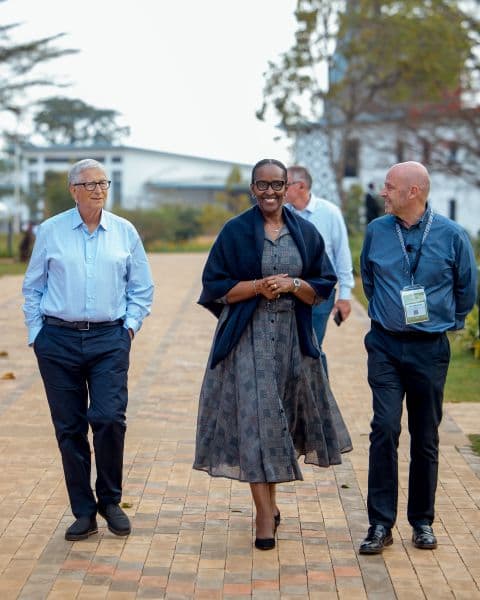
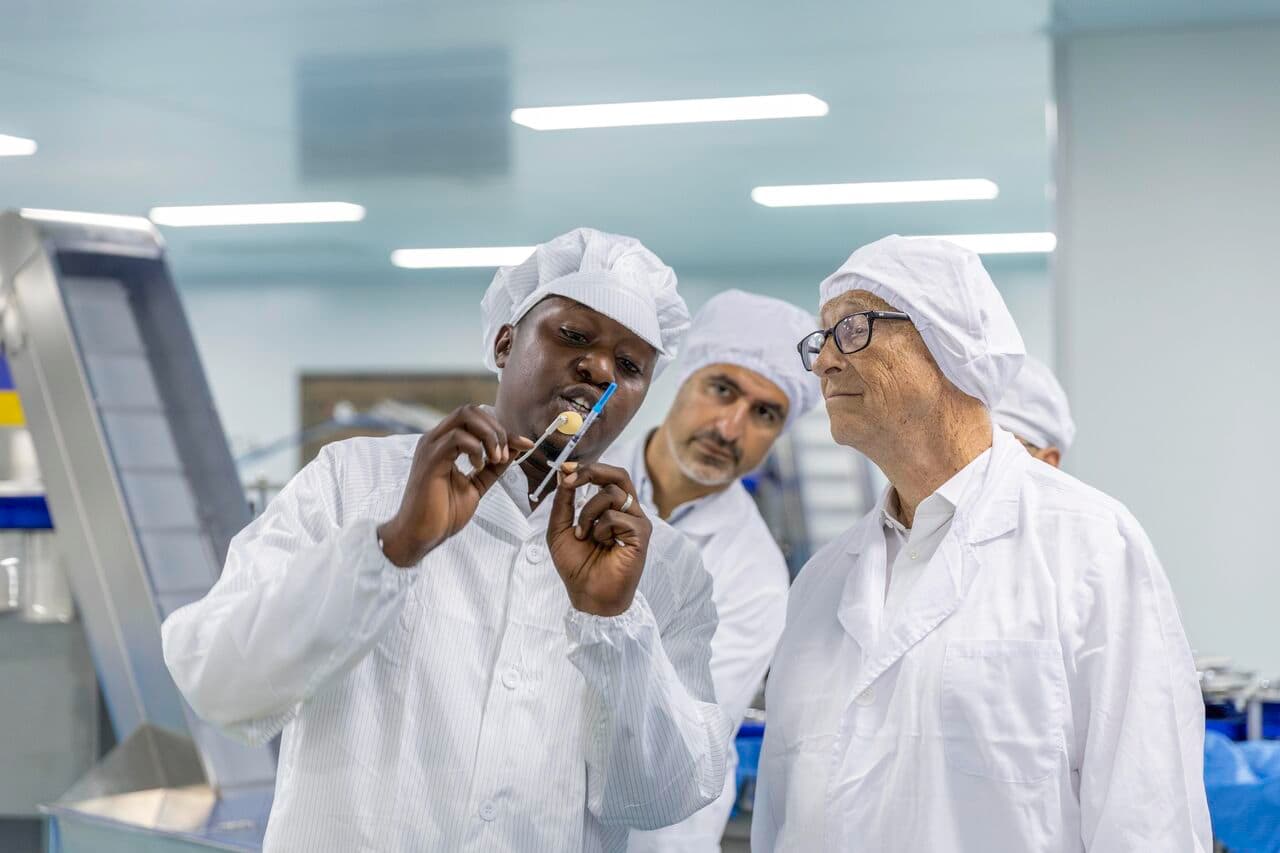
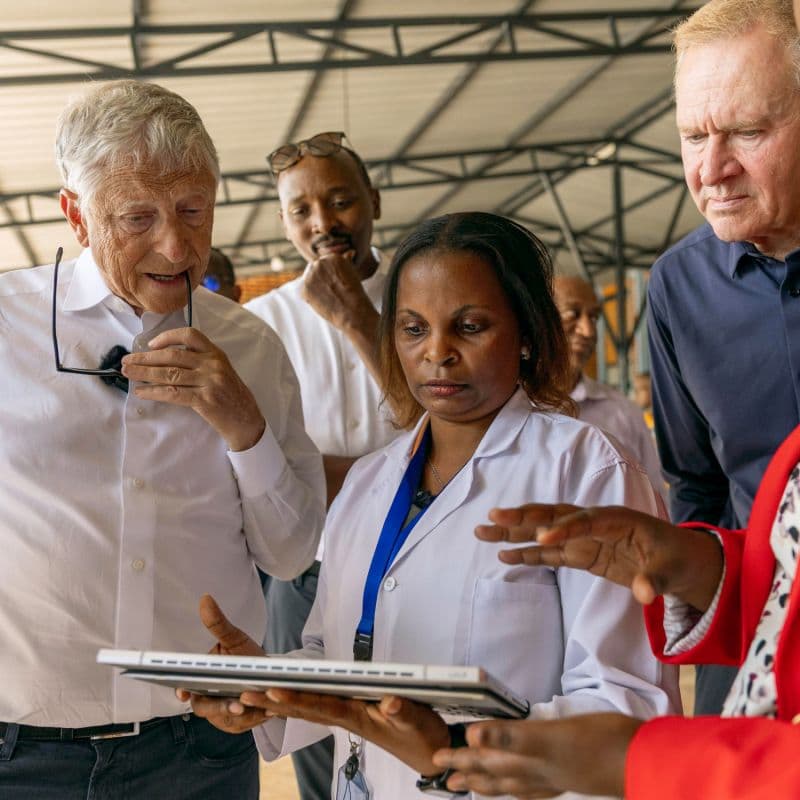
Gates toured Mwulire Health Center in Rwamagana District, which serves more than 37,000 residents, providing everything from maternal and child health services to outpatient care. He visited the TKMD Syringes Manufacturing Plant, a Rwandan facility that has produced more than 22 million syringes since 2024, secured a UNICEF contract for 150 million more units, and is on track to cut medical supply transport times across East, Central, and Southern Africa by up to 90 percent. He met community health workers — the backbone of Rwanda's model — in the field.
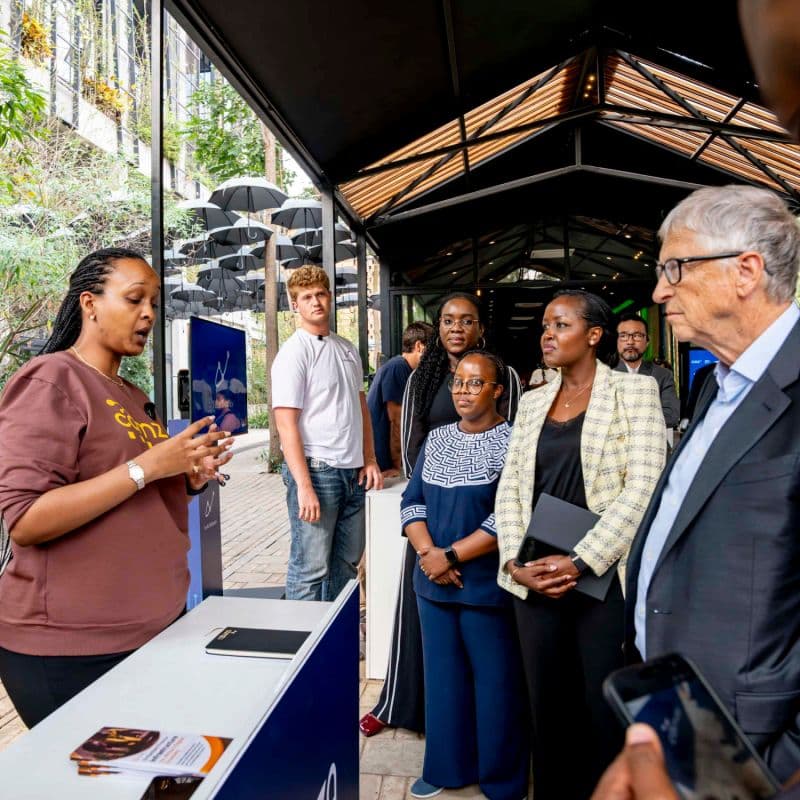
He ended the trip at Carnegie Mellon University Africa in Kigali, engaging with students and researchers working on digital public infrastructure. His conclusion, posted on LinkedIn before he left, was unambiguous: "It was inspiring to hear from the next generation of leaders. Rwanda has already achieved remarkable progress with even greater opportunities ahead, and its young people are poised to shape not only the African continent, but the world."
The Design of a Health System — and Why It Starts With Mindset
The most important lesson from Rwanda's health transformation is not a technology. It is not a programme. It is a philosophy about what a health system is for and who it is designed to serve.
Most health systems in the world — including in wealthy countries — are designed around the hospital. The hospital is the center of gravity, the endpoint of care, the institution that receives the sick after they have already become seriously ill. This model is expensive, episodic, and profoundly unequal. It benefits people who live near hospitals, who can afford transport, who have the flexibility to leave work and seek care.
Rwanda inverted this model. It made the community health worker — not the hospital — the center of its primary health architecture. This meant care came to the patient, rather than the patient reaching for care. It meant surveillance happened at the household level, not the emergency room level. It meant that a pregnant woman in a rural village in Rwamagana District was not an afterthought of the health system but its primary concern.
The results of this philosophical choice are the 80 and 85 percent figures that made Gates pause.
What is less discussed — but equally important — is the role that student and youth culture played in sustaining this transformation. Rwanda's health revolution did not happen only in clinics. It happened in schools, universities, and communities where a generation of young Rwandans was raised to believe that health equity was both a moral obligation and a technical problem worth solving. Institutions like the University of Global Health Equity, built on the vision of the late Dr. Paul Farmer, train doctors and public health leaders with an explicit mandate: go back to the communities that need you most. Do not cluster in Kigali. Do not migrate to Europe.
Gates attended the inaugural Paul E. Farmer Butaro Dialogues on Health Equity and Innovation — a conference that brought together students, government officials, academics, and health experts to explore how the next generation of African leaders can carry this work forward. He reflected publicly on Farmer's foundational belief: "Where you live should never determine whether you live."
That belief is not only a medical principle. It is a design principle. It demands that every system — health, education, finance, media — be built with the person furthest from the center in mind first.
AI as Infrastructure, Not As Magic
One of the more consequential announcements in the run-up to Gates' visit was the Horizon 1000 initiative — a $50 million programme launched earlier in 2026 by the Gates Foundation in partnership with OpenAI. Its goal: deploy AI tools across 1,000 primary healthcare clinics and surrounding communities in Rwanda by 2028.
Rwanda was selected as the first beneficiary not because it was the most technologically advanced, but because it had already built the infrastructure for AI to be useful. The National Health Intelligence Center — Rwanda's digital nerve center for healthcare — connects service data, patient records, supply chain information, insurance claims, workforce data, and civil registration into a single integrated platform. AI can only be as good as the data it draws from. Rwanda had spent years building that data foundation.
The AI tools being piloted are not replacing clinicians. They are augmenting them — helping a community health worker identify a high-risk pregnancy earlier, helping a nurse at a rural health center make a faster and more accurate clinical decision, helping logistics coordinators manage medical supply chains across a country of fourteen million people. This is the version of AI that Gates believes will define Africa's technological trajectory.
"AI will only make a difference if it helps people do their jobs better and improves the quality of the services they provide," he told CNBC Africa. "Whether it's supporting a nurse to make a better clinical decision, helping a community health worker identify a high-risk pregnancy, or giving a farmer better information, AI should strengthen human capability rather than replace it."
This framing — AI as a tool for amplification, not substitution — has profound implications beyond health. Rwanda's Rwanda Coding Academy is producing a generation of young developers who understand this distinction instinctively. Carnegie Mellon University Africa's Upanzi Network is building digital public infrastructure solutions designed specifically for African contexts. These are not students consuming AI invented elsewhere. They are students building AI for their own countries.
Gates was direct about what this means for the rest of the continent: "AI should not only be available to those who already have access; we should bring AI to those who need it most."
What the Rest of Africa Can Learn — and Do
Rwanda's model is not perfectly transferable. Its political context, its geography, its post-genocide national cohesion around institution-building — these are unique factors that shaped what became possible. Any country that tries to simply copy Rwanda's health system without understanding the twenty-five-year institutional investment that produced it will be disappointed.
But the principles are exportable. Every country in Africa can ask: Are we designing our systems around the most vulnerable person first, or are we designing them around the most convenient infrastructure? Are we investing in the last mile of delivery — the community health worker, the village-level data collection, the local manufacturing — or are we building hospitals in capitals and calling it a health system? Are we treating our students as passive recipients of knowledge, or as active builders of the solutions their countries need?
These are not rhetorical questions. They are design questions. And they apply to every sector — not only health.
They apply to education systems that still model themselves on colonial curricula rather than the creative problem-solving an AI-era economy demands. They apply to financial systems that have been slow to build on the mobile money revolution that Africa pioneered and the world has since tried to replicate. They apply to media — the platforms that shape what millions of people believe is possible, what they understand about their economies, who they see as entrepreneurs, scientists, and leaders worth emulating.
Gates cited mobile money explicitly as the model for what is coming next. "Africa has already shown that by leapfrogging traditional banking through mobile money," he said. "I believe AI, digital public infrastructure, and advances in health and agriculture will create the same opportunity for this generation."
The generation he is referring to is already building. Across Kampala, Lagos, Nairobi, Accra, and Kigali, young founders are constructing platforms, services, and systems not because they were told to, but because they can see the gaps that need filling and they have the skills to fill them. The Rwanda Coding Academy is not an anomaly. It is a signal.
The Development Assistance Question — and Why It Makes This Moment Urgent
Gates was also candid about the external environment. Development assistance is declining. Aid budgets from wealthy nations are under pressure. The multilateral institutions that have funded African health and education programmes for decades are being asked to do more with less. The window of external support that helped finance Rwanda's transformation over the past quarter century is narrowing.
"When resources are constrained, the priority should be to invest in the interventions that we know do the greatest good," he said.
This is not a comfortable message. But it is an honest one. And hidden inside it is an opportunity.
If external funding is becoming less reliable, then the African countries and institutions that have already developed the capacity to generate, allocate, and sustain their own resources — financial, intellectual, and institutional — will be far better positioned for the decade ahead. Rwanda's domestic health financing has grown precisely because its government decided early that dependency was a vulnerability. Its homegrown manufacturing — TKMD syringes, QCIL medicines in Uganda, Revital Healthcare in Kenya — is not only an economic asset. It is a sovereignty strategy.
The broader lesson is that the transition from aid-dependent development to self-sustaining growth is not only possible. It is already happening. Rwanda is the proof.
The broader implication reaches far beyond Rwanda. Across Africa, governments are increasingly investing in digital public infrastructure, AI research, local manufacturing, and knowledge-based economies. The countries that combine strong institutions with technology, education, and long-term policy consistency are likely to become the continent's next centers of innovation. Rwanda offers one possible blueprint—not because every nation should copy it, but because it demonstrates what sustained institutional investment can achieve.
A Continent's Greatest Asset
Gates closed his CNBC Africa interview with a statement that deserves to be read slowly: "Africa's greatest asset is its young people. By 2040, the continent will have the world's largest working-age population. If countries continue investing in health, education, and innovation, that demographic shift can become one of the greatest economic opportunities of this century."
What is notable about this statement is not its optimism — Gates has always been an optimist about Africa. What is notable is the conditionality buried inside it: if countries continue investing.
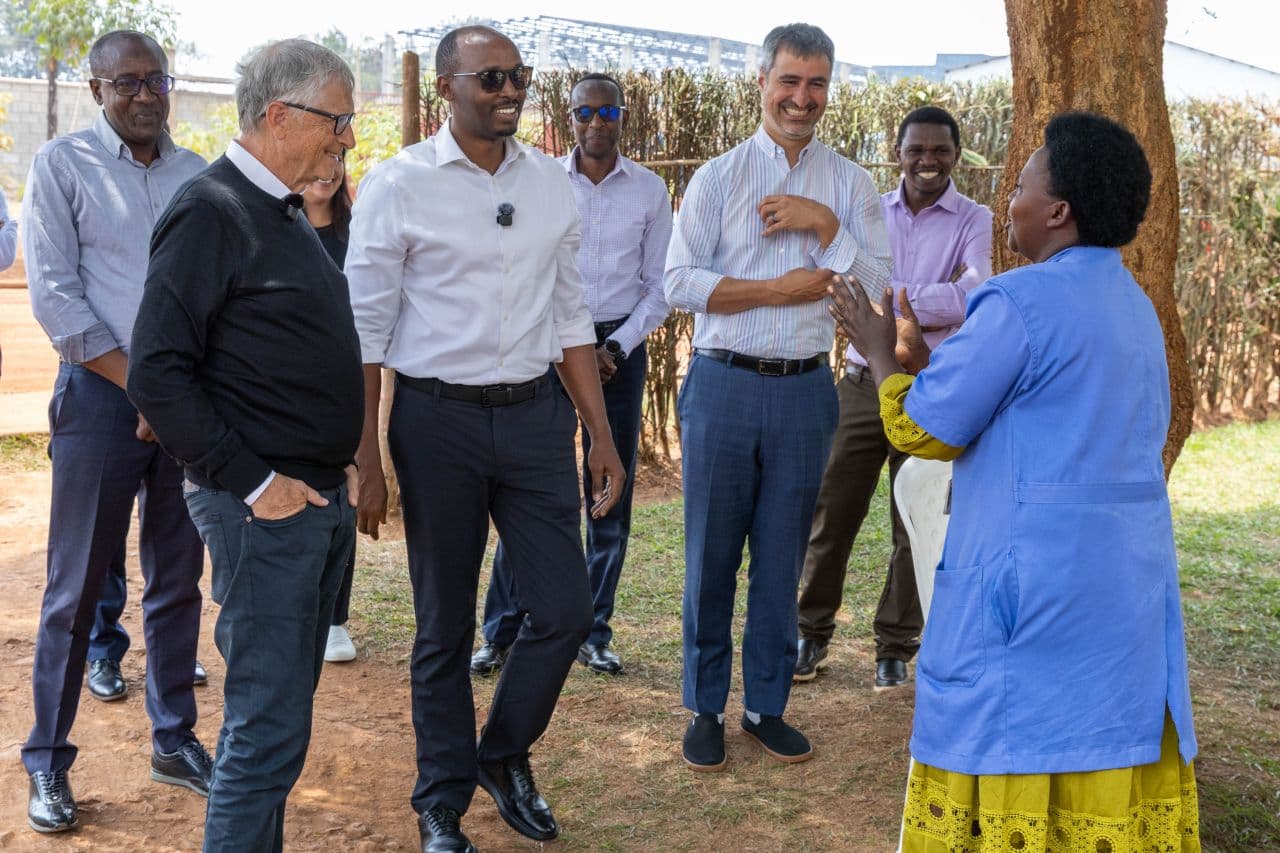
Rwanda's extraordinary story is not a story of luck. It is not a story of natural resources or geography. It is a story of deliberate, sustained, generation-long investment in people — in their health, in their education, in their capacity to solve problems and build institutions. The results are visible in the health statistics. They are visible in the drone corridors that Zipline flies across the country, delivering blood products and vaccines to remote hospitals. They are visible in the faces of the students Gates met at the University of Global Health Equity, who are not waiting to be given a future.
For founders, policymakers, investors, educators, and students, Rwanda's story offers a reminder that transformation rarely begins with technology alone. It begins with institutions, long-term thinking, and a willingness to invest consistently in people. Technology amplifies those decisions—but it cannot replace them. Africa's competitive advantage in the coming AI era will belong to the countries and organizations that build trusted systems before chasing the next breakthrough. They are building one.
That is the message Bill Gates came home with from Rwanda this week. It is the message that should resonate in every capital on the continent — and in every school, clinic, university, and startup building the next version of Africa.
The century that is being built is not coming from outside. It was never coming from outside.
It is being built here. By the people who live here. For the people who need it most.
WigWag Africa covers Business, Technology, Culture, Education, and Finance across the African continent. Follow us at @wigwagafrica and subscribe to the WigWag Daily briefing at wigwagafrica.com..




Comments (0)