
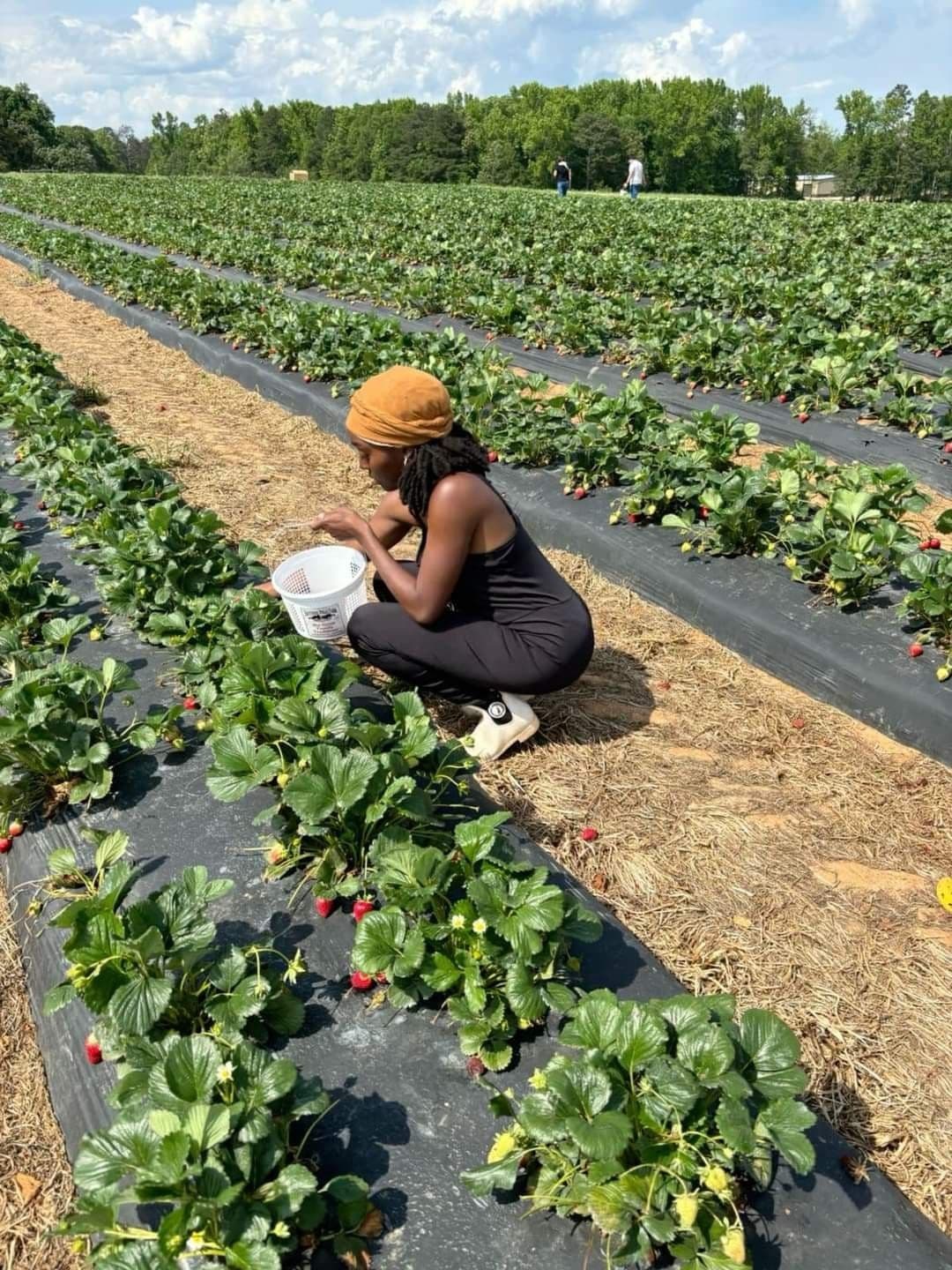
The Green Goldmine: Why African Agribusiness Is the Frontier for Financial Sovereignty
The Green Goldmine: Why African Agribusiness Is the Frontier for Financial Sovereignty
This voice experience is generated by AI. Learn more.
For decades, African agriculture was viewed through a narrow lens—subsistence, survival and underdevelopment.
That narrative is now breaking.
A new generation of agri-preneurs is reframing the continent’s greatest overlooked asset: land. Africa holds nearly 60% of the world’s uncultivated arable land, and what was once seen as a limitation is now emerging as one of the most strategic economic advantages of the 21st century.
As global supply chains tighten and food security becomes a geopolitical priority, Africa is transitioning from a raw material exporter into a sophisticated agribusiness hub.
A Quiet Economic Powerhouse
Agriculture has always been central to Africa’s economy, but its scale is often underestimated in global financial conversations.
GDP Contribution: Agriculture contributes roughly 23% of Africa’s total GDP. In countries like Ethiopia and Mali, that figure exceeds 35%. Employment: Nearly 60% of the continent’s workforce depends on the sector. Market Potential: According to the World Bank, Africa’s food and beverage market is projected to reach $1 trillion by 2030.
These figures point to more than stability—they signal scale.
The Export Engine Powering Global Demand
Africa is not just feeding itself. It is supplying the world.
Across key commodities, the continent holds dominant positions:
Cocoa: Ivory Coast and Ghana produce roughly 70% of global supply. Cashews: West Africa accounts for over half of global raw cashew exports. Coffee: Ethiopia—the birthplace of Arabica—exports over $1.2 billion annually, alongside strong output from Uganda. Tea: Kenya remains the world’s leading exporter of black tea. Horticulture: Kenya supplies approximately 35% of all cut flowers sold in the European Union.
These are not marginal contributions—they are foundational to global consumption patterns.
From Farming to Financial Mobility
The most compelling shift is not production volume—it is wealth creation.
Traditional subsistence farming has historically trapped families in cycles of low income and vulnerability. But modern agribusiness is rewriting that equation.
By integrating:
irrigation systems data-driven farming direct-to-market logistics
a growing number of first-generation commercial farmers are achieving middle-class status within five years, with estimated success rates between 15% and 20%.
In markets with strong fintech adoption—such as Kenya and Nigeria—the impact is even more pronounced.
Farmers leveraging mobile money and smart farming tools are seeing:
up to 30% increases in profit margins reduced reliance on intermediaries who historically captured up to 70% of value
This is not just agricultural growth. It is economic repositioning.
Technology and the Rise of Agricultural Sovereignty
The convergence of agriculture and technology is creating a new paradigm.
When farmers use:
data to predict weather patterns digital platforms to access markets blockchain to verify product authenticity
they shift from being price takers to informed participants in global markets.
This represents a deeper transformation—one that aligns with a broader concept of financial sovereignty.
Control is moving:
from intermediaries to producers from uncertainty to intelligence Why Investors Are Paying Attention
For years, Africa’s agricultural sector has been overlooked by traditional investment narratives—often perceived as fragmented or high-risk.
But underlying fundamentals are shifting rapidly:
Urbanization: Rapid population growth in cities is driving demand for processed, locally sourced food. Climate Innovation: Africa is becoming a testing ground for drought-resistant crops and adaptive farming systems. Trade Integration: The African Continental Free Trade Area is expected to boost intra-African agricultural trade, potentially increasing sector income by $30 billion by 2035.
What once appeared “messy” is beginning to reveal structure—and opportunity.
The Bottom Line
Africa’s wealth has long been associated with what lies beneath its soil—minerals, oil and natural resources.
But the next wave of value is emerging from what grows on its surface.
Agribusiness is no longer a survival sector. It is becoming a strategic engine for:
economic growth financial independence continental transformation
And for those paying attention, the signal is clear:
The future of African wealth is not just extracted. It is cultivated.




Comments (0)