
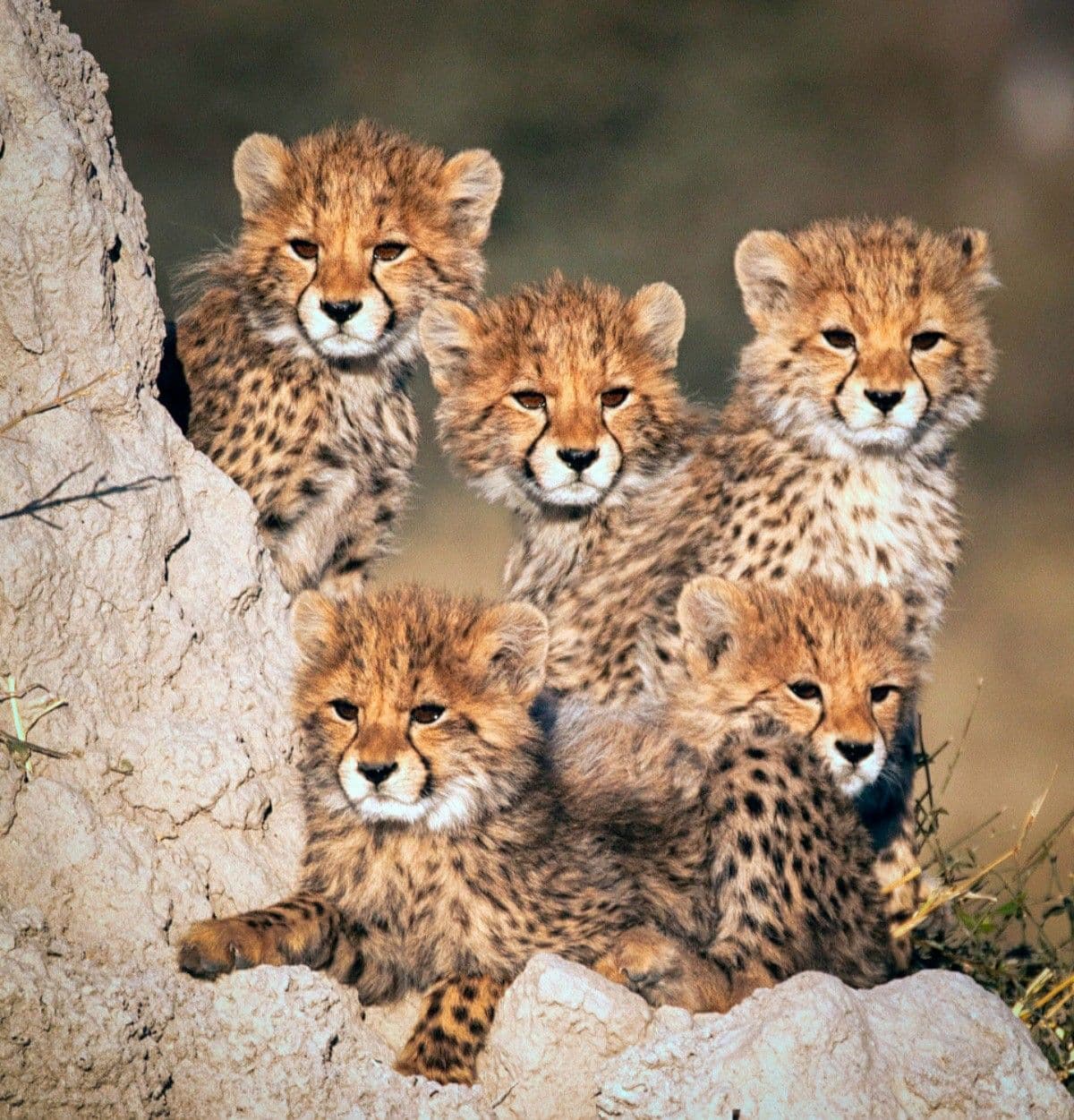
What You Didn't Know About Cheetahs in Namibia
Namibia is the Cheetah Capital of the World. It holds roughly 1,500 to 2,000 of the planet's remaining approximately 7,500 wild cheetahs — the largest population of any country on Earth, or roughly 20 to 27 percent of the global wild cheetah population concentrated in a single nation. But Namibia isn't alone at the top. Tanzania, South Africa, Mozambique and Botswana all hover in the 800-to-950 range, while Kenya sits at approximately 716. The cheetah is not evenly distributed across Africa — it is concentrated in the southern and eastern savannas, where open vegetation, prey availability and conservation infrastructure all align.
Before going deeper into cheetahs specifically, it's worth setting the macro picture. According to UN Tourism, 1.52 billion international tourists traveled the world in 2025, nearly 60 million more than in 2024, representing 4 percent growth. Africa outperformed every other region, posting 81 million arrivals — an 8 percent increase — with North Africa leading the continent at plus-11 percent. Tourism now contributes roughly $228 billion to Africa's economy, about 5 to 7 percent of continental GDP, and supports 30.2 million jobs across the continent. So the question becomes: what role does the cheetah actually play in that number?
The answer is yes, tourists are genuinely interested in cheetahs, and the data backs it up. A peer-reviewed study published in the Journal of Ecotourism analyzed 2,245 tourist surveys across seven protected areas in South Africa. The elephant came out on top, named a favorite by 48 percent of tourists, followed by the black and white rhino and the lion, both at 36 percent... the cheetah came in just behind at 35 percent, with the giraffe close behind at 34 percent. Out of 299 mammal species and more than 850 bird species surveyed, the cheetah ranks fourth in tourist preference. Another study found that when tourists actually see a cheetah in the wild, 87 percent rate the experience highly on viewing appeal, nearly identical to the elephant's 88 percent and the lion's 86 percent. The cheetah isn't the single most popular animal on the continent... that crown still belongs to the elephant... but it is consistently in the top five, and for first-time visitors to Africa, the appeal often runs even stronger.
Does the cheetah actually drive tourism revenue? Yes, both directly and indirectly. In Namibia, cheetahs are described as a "good draw card" for generating tourism money, according to a Namibian official, and the country's Cheetah Conservation Fund, headquartered in Otjiwarongo, runs eco-tourism operations, a genetic lab, a veterinary center and a model farm that together attract international visitors, volunteers and researchers. The economics behind that draw are sizable: CCF's total economic impact on Namibia is estimated at roughly $4.13 million per year, voluntourism programs at Namibian cheetah NGOs start around $1,200 for two weeks and run as high as $576 per person per night for guest stays, and nature-based tourism's total contribution to Namibia's GDP was estimated, as of 2003, at between N$1.013 billion and N$2.022 billion. The cheetah isn't the only reason people visit Namibia, but it functions as a flagship species that anchors the broader wildlife tourism economy around it.
Does any of this actually move the GDP needle? Tourism accounts for 6.9 percent of Namibia's GDP directly, and when indirect effects are folded in, that figure climbs to somewhere between 14 and 15 percent. Namibia's government projects tourism's contribution will reach N$15.4 billion in 2025/26 and N$16 billion the following fiscal year. The cheetah is a component of that growth, not its sole driver, but a critical one nonetheless... Namibia's tourism brand is built on wildlife, open landscapes and low-density, high-value experiences, and international tourists stay an average of 14 to 21 days, far above the African average. They come for the whole package, and the cheetah is one of the headline acts in it.
Here's where the story turns more sobering. Fewer than 7,500 wild cheetahs remain globally, and the IUCN lists the species as Vulnerable, with two subspecies classified as Critically Endangered. In Namibia specifically, 95 percent of cheetahs live on commercial farmland rather than inside national parks, which puts them in direct, daily conflict with livestock farmers... they're also threatened by habitat loss, prey depletion, poaching and the illegal exotic pet trade. Cheetahs have notably low reproductive success, with wild females producing an average of only 1.7 cubs to adulthood, so population growth is slow and any recovery remains fragile. The economic argument for conservation, though, is fairly simple: a live cheetah generates tourism revenue, a dead cheetah generates nothing. The Cheetah Conservation Fund's Livestock Guarding Dog Programme, which places Anatolian shepherds with farmers to protect their herds, has successfully reduced livestock predation without harming cheetahs in the process, proving that coexistence between farmers and predators is economically viable, not just ecologically ideal.
So, pulling it together: Namibia is the African country with the most cheetahs, holding somewhere between 1,500 and 2,000 of them. Tourists are genuinely interested in the species, with 35 percent naming it a favorite and 87 percent rating a sighting highly. It isn't the most popular animal on the continent... that's still the elephant... but it lands solidly in the top four. It does drive tourism revenue, through flagship appeal, voluntourism and conservation-linked travel, and it does move GDP, given that tourism represents 6.9 percent of Namibia's economy directly and 14 to 15 percent once indirect effects are counted. What it isn't, unfortunately, is safe: with fewer than 7,500 cheetahs left in the wild, conservation remains very much a race against time.
The cheetah, in the end, is a case study in how wildlife becomes economic infrastructure. It's not just an animal — it's a tourism asset, a conservation challenge and a data point in the broader story of Africa's $228 billion tourism economy. Africa welcomed 81 million international visitors in 2025, an 8 percent increase and the fastest-growing performance of any region in global tourism, and the cheetah is one of the reasons they keep coming. The open question is whether the economics of conservation can outpace the economics of extinction. Namibia is betting they will. The rest of Africa is watching.




Comments (0)