

Cover image for: Why SpaceX, Anthropic and OpenAI Became Giants

Why SpaceX, Anthropic and OpenAI Became Giants

By WigWag Africa13 min read
Play Insight(21 min read)
0:000:00

A $965 billion valuation here. A $1.75 trillion IPO there. Three American companies could soon add nearly $3 trillion to global markets. Yet across Africa, startups that solve real problems struggle to survive. This is not bad luck. It is a system failure.
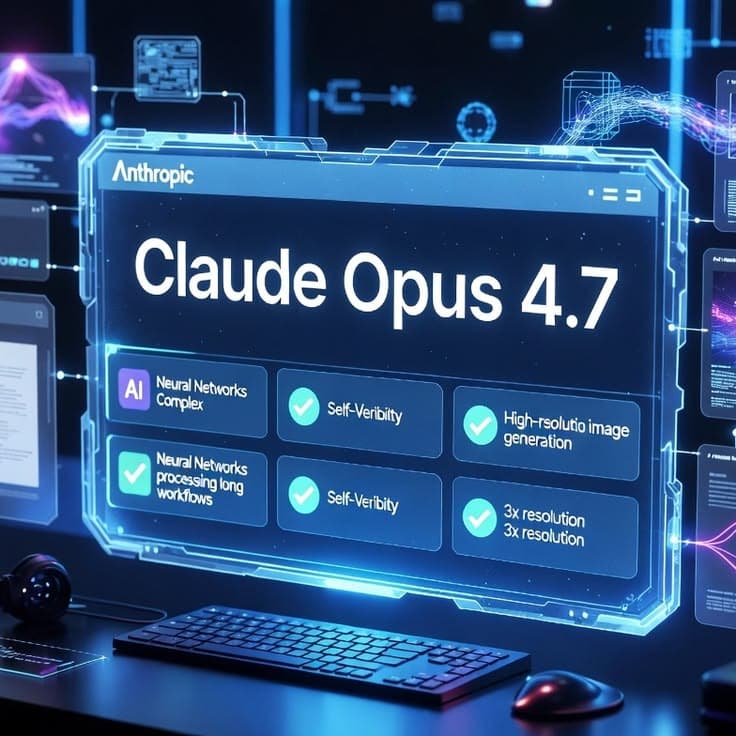
Image description

The Reckoning Is Here

Within a matter of weeks this year, three of the most influential companies of the current technology cycle took major steps toward becoming publicly traded businesses. SpaceX formally filed for what could become the largest initial public offering ever attempted — targeting a valuation near $1.75 trillion. OpenAI, valued privately at roughly $850 billion, is preparing for its own market debut. And Anthropic, maker of the Claude AI agent, just raised $65 billion in a Series H funding round at a post-money valuation of $965 billion — surpassing OpenAI .

Collectively, these companies could introduce close to $3 trillion in market value to public investors over a remarkably short period. SpaceX generates real revenue — approximately $18.7 billion in 2025, nearly double its 2023 levels. Anthropic reports run-rate revenue crossing $47 billion. OpenAI has generated one of the fastest revenue growth trajectories ever seen in the software industry .

And yet, across the Atlantic, a different story unfolds.

Image description

Part One: How the West Built Its Machine

The United States: A System Designed for Scale

The American innovation ecosystem is not an accident. It is a machine — carefully constructed over decades, with every component designed to amplify the next.

Capital at Unprecedented Scale When Anthropic needed $65 billion, it found investors. Altimeter Capital, Dragoneer, Greenoaks, and Sequoia Capital led the round. Amazon committed $5 billion. Google, Microsoft, and strategic infrastructure partners including Micron, Samsung, and SK Hynix joined . This is not unusual. It is structural.

The United States is home to more than 130 of the world's top institutions for computer studies. It keeps 80 percent of its best academic AI researchers — while the United Kingdom retains fewer than half . American AI firms attracted private funding that dwarfed European competitors: the UK attracted approximately $2.6 billion, France $1.4 billion, Germany $550 million. The United States? Tens of billions .

Government as Enabler, Not Obstacle The US government does not build AI companies. But it builds the conditions for them to thrive. Defense contracts seed early research. The CHIPS Act funds domestic semiconductor manufacturing. NASA buys SpaceX launches. The National Science Foundation underwrites foundational AI research. This is not socialism. It is strategic infrastructure.

The result is a feedback loop: research → talent → startups → revenue → IPOs → more capital → more research. A self-reinforcing cycle that compounds every year.

China: The Centralized Challenger

China operates under a different model — but no less effective. The state directs resources toward national priorities. Heavy investment in AI research, semiconductor development, and data infrastructure is accelerating China's advance toward global AI dominance . The government also controls the data environment, which provides Chinese AI companies with access to vast training datasets that Western firms cannot easily replicate.

Chinese AI adoption rates reflect this state-driven push. According to Microsoft's Global AI Adoption in 2025 report, China's enterprise AI adoption rate stands at approximately 50 percent — among the highest globally, trailing only India and the UAE [citations:2].

The United Kingdom and Europe: Caution as Culture

The contrast with Europe could not be starker. The UK ranks third globally in computer education. It trains world-class AI talent and attracts strong investment. But it struggles to turn those advantages into long-term companies and careers .

Why? Because European policymakers are applying what observers call "an abundance of caution." Rishi Sunak established the UK safety summit. Keir Starmer continued the emphasis on control alongside growth. The EU has made trust and security a priority in AI regulation .

The result is a technology sector that is hidebound, fearful of going too far too soon — with the consequence that it is not going very far at all. AI founders list their priorities as finance, favourable tax treatment, a ready early market, clearer and more predictable regulation, fast-track visas for top talent, and access to affordable computing power. The UK and Europe struggle to deliver any of these at the scale the US offers .

The United Arab Emirates and Saudi Arabia, by contrast, are aggressively courting AI talent with exceptional working facilities, infrastructure, ease of operation, and capital. They talk the language of founders. The UK-EU region, one observer noted, is "relying on the past, on a cultural, educational tradition and reputation, but not engaging sufficiently with the future" .


Part Two: The African Reality

The Trust Deficit

Africa is not poor in capital. According to the Africa Finance Corporation, an estimated $4.4 trillion in African capital — spanning pension funds, insurance assets, and bank reserves — is largely parked in short-term government securities rather than long-term infrastructure projects . About $600 billion sits in pension funds. $400 billion in insurance pools. Both are naturally suited for long-duration investments such as roads, power, and industrial assets.

Yet much of this capital remains tied to treasury bills and other low-risk instruments — effectively financing consumption rather than development .

"Capital doesn't move because you ask it to," said Samaila Zubairu, president and CEO of AFC. "It moves when risk is properly allocated and priced" .

The hesitation reflects deeper structural concerns. Investors are reluctant to commit funds to projects where regulatory uncertainty, weak data, and execution risks remain unresolved. Without credible frameworks that ensure transparency and predictable returns, capital continues to stay on the sidelines .

Here is the irony: "The lowest default rates on infrastructure anywhere in the world are in Africa — lower than in Europe or the United States," said Patrick Njoroge, former Governor of the Central Bank of Kenya. "But that sort of information still does not change the perception" .

Africa is not risky. It is perceived as risky. And perception, in global finance, is reality.

The Fragmentation Problem

Africa remains a continent of 54 countries, each with its own regulations, tax systems, currencies, and customs procedures. A startup expanding from Kenya to Uganda faces the same friction as expanding from Kenya to Canada — sometimes more. This fragmentation makes it extraordinarily difficult to build pan-African businesses at scale .

The European Union, by contrast, is a single market of 27 countries with harmonized regulations, free movement of capital, and a unified currency. A startup founded in Estonia can sell to Portugal without changing a single line of its compliance paperwork. This is not a minor advantage. It is the difference between scaling and stalling.

The Infrastructure Gap

SpaceX could not exist without American launch pads, NASA partnerships, and a deep supply chain of aerospace manufacturers. Anthropic and OpenAI could not exist without American data centers, chip designers, and cloud providers.

Africa is building that infrastructure now — but from a starting line decades behind. Wingu Africa is constructing Tier III-certified, carrier-neutral data centers across East Africa, working to create "a physical digital backbone that allows East Africa to function as one integrated digital corridor rather than isolated markets" . The company has helped reduce connectivity costs by up to 40 percent in some regions by localizing infrastructure .

In Ethiopia, Wingu's new Cloud Exchange now allows companies to deploy infrastructure in six minutes — tasks that previously took six months due to customs delays and hardware procurement bottlenecks . An IT professional no longer needs to spend months dusting equipment and monitoring air conditioning. They can innovate.

This is progress. But it is progress measured against a baseline of extreme deficit. Africa hosts less than 1 percent of global data centers. Eighty-five percent of sub-Saharan Africa still lacks reliable electricity access . Without power, there is no cloud. Without cloud, there is no AI at scale. Without intelligence infrastructure, there is no modern economy. Data centers, trusted information systems, digital identity networks, and AI platforms are becoming as strategically important to nations as roads, ports, and electricity grids were during the industrial era.


Part Three: The Local Startup Paradox

Built in Africa, Operated from Europe

Consider SafeBoda. Founded in Uganda, built for Ugandan roads, staffed by Ugandan developers. Yet today, the company has a legal and operational presence structured through Europe. Why? Because investors demanded it. Because payment processing required it. Because the regulatory environment in Kampala was too unpredictable for venture capital to trust .

Jumia, often called "Africa's Amazon," is incorporated in Germany. Its IPO was on the New York Stock Exchange. It reports earnings in euros. The company is African in market but European in legal identity — a structure forced by the absence of deep, reliable capital markets on the continent.

These are not failures of entrepreneurship. They are failures of ecosystem.

The Reasons African Startups Fail

Tayo Olowu, a venture capital strategist, has catalogued the reasons African startups keep failing — and they are different from Silicon Valley's failures .

Market misalignment and copy-paste models. Many founders replicate Silicon Valley ideas without adapting to African realities. "Uber for X" models fail due to low car ownership, bad roads, and high fuel costs. E-commerce struggles due to poor logistics, digital payment barriers, and low purchasing power. Jumia's ongoing losses are a case study .

Over-reliance on VC funding and burn rate mismanagement. Startups raise big, burn fast, and die when funding dries up. Kune Foods in Kenya burned $1 million on cloud kitchens but mispriced products, leading to quick failure. 54Gene in Nigeria raised $45 million but collapsed due to poor business fundamentals .

Regulatory and infrastructure bottlenecks. Bike-hailing bans in Nigeria and Kenya killed Gokada, ORide, and SafeBoda's expansion plans. Hostile regulations, unreliable power, and poor internet remain daily realities .

Scaling too early without product-market fit. Many startups expand before validating demand, wasting capital. SafeBoda expanded to Nigeria but exited after failing to compete. Sendy in Kenya expanded too fast in logistics and shut down .

The successful African startups are those that pivot when necessary. mPharma in Ghana shifted from an online pharmacy to a healthcare infrastructure provider. Twiga Foods moved from B2C food delivery to B2B supply chain logistics .


Part Four: The $3 Trillion Question for Africa

What Would It Take?

The American system works because it is a system — not a collection of isolated good ideas. Capital flows from venture funds to startups. Startups scale using cloud infrastructure built by American companies. Exits happen on American stock exchanges. The returns recycle into new funds. The cycle repeats.

Africa has the components — talent, capital, market demand — but they are disconnected. Pension funds sit on billions but cannot invest in startups because regulations require AAA-rated collateral. Governments want innovation but change tax policies unpredictably. Investors see opportunity but cannot get reliable data to price risk.

The Africa Finance Corporation and partners are working on a new financial architecture to improve the flow of capital into productive sectors. This includes developing instruments that offer better risk-sharing mechanisms, such as guarantees and credit enhancements, to make infrastructure investments more attractive .

There is also a growing push to educate institutional investors. Many pension fund managers remain highly conservative, prioritizing liquidity and capital preservation over returns, and often lack familiarity with infrastructure as an asset class. Changing this mindset is critical .

The Trust Mandate

This is where WigWag Africa's mission intersects with the continent's economic future.

The gap between perception and reality continues to affect investor decisions. "We have to deal with what I call passive risk," said Patrick Njoroge, "and a lot of that relates to information" .

Africa has the lowest infrastructure default rates in the world — lower than Europe, lower than the United States. That is a fact. But it is not a well-known fact. It is not a fact that appears in Bloomberg terminals or Goldman Sachs pitch books. The narrative has not caught up to the reality. This gap between reality and perception is not merely a communications problem. It is an economic problem. Capital follows information, and information follows trust.

Trust is not built through press releases. It is built through transparency, consistency, and third-party verification. It is built through reporting that is rigorous, independent, and focused on substance over hype. It is built by platforms that hold power accountable while telling the stories of those who are building despite the odds.

The Opportunity

The global AI race is not static. The three zones of AI success — the United States, China, and the Gulf states — are not permanently fixed . The Gulf nations are investing substantially in higher education, working facilities, infrastructure, and capital. They talk the language of founders. They are hungry for talent and AI entrepreneurs .

Africa has something the Gulf does not: a population of 1.4 billion people, the youngest in the world, increasingly connected and increasingly educated. By 2050, one in four people in the world will be African. "If you want to do business globally, you will be handicapped if you do not do anything with Africa," said Kwan Chi Man, Group CEO of Raffles Family Office .

The continent's superpower — if it chooses to deploy it — is not minerals or cheap labor or even mobile money. African markets have repeatedly demonstrated an ability to leapfrog legacy systems, moving directly from cash to mobile payments, from limited banking access to fintech ecosystems, and increasingly from traditional learning models to digital-first education. The AI era may offer another opportunity to compress decades of development into years. It is the ability to leapfrog. To build infrastructure that is digital-first, renewable-powered, and inclusive from the start. To create regulatory frameworks that protect investors without suffocating founders. To develop capital markets that recycle domestic savings into domestic growth.

But leapfrogging requires a foundation. And that foundation is not just fiber optic cables and data centers. It is trust.


Conclusion: The Systems Gap

SpaceX, Anthropic, and OpenAI did not become trillion-dollar companies because their founders were smarter or worked harder. They became trillion-dollar companies because they were born into systems designed to produce such outcomes — systems of deep capital, reliable infrastructure, supportive policy, and predictable regulation.

Africa has the talent. It has the natural resources. It has the demographic tailwind. What it lacks is not potential. What it lacks is the connective tissue — the financial architecture, the regulatory predictability, the data transparency, the trust — that allows potential to become prosperity.

The $3 trillion question is not whether Africa can produce a SpaceX. The question is whether Africa can build the conditions that make SpaceX possible. The answer will determine not just the continent's economic future, but the shape of the global digital economy for the rest of this century. The next trillion-dollar company may not be decided by who has the best technology, but by which societies build the systems that allow technology to scale.

0

Comments (0)

Share Post

WhatsApp

WIGWAG WHATSAPP CHANNEL

Join the wigwag community.

JOIN
Why SpaceX, Anthropic and OpenAI Became Giants | WigWag Africa